Best Smart Water Shutoff Valves in 2026: Stop a Leak Before It Floods Your Home
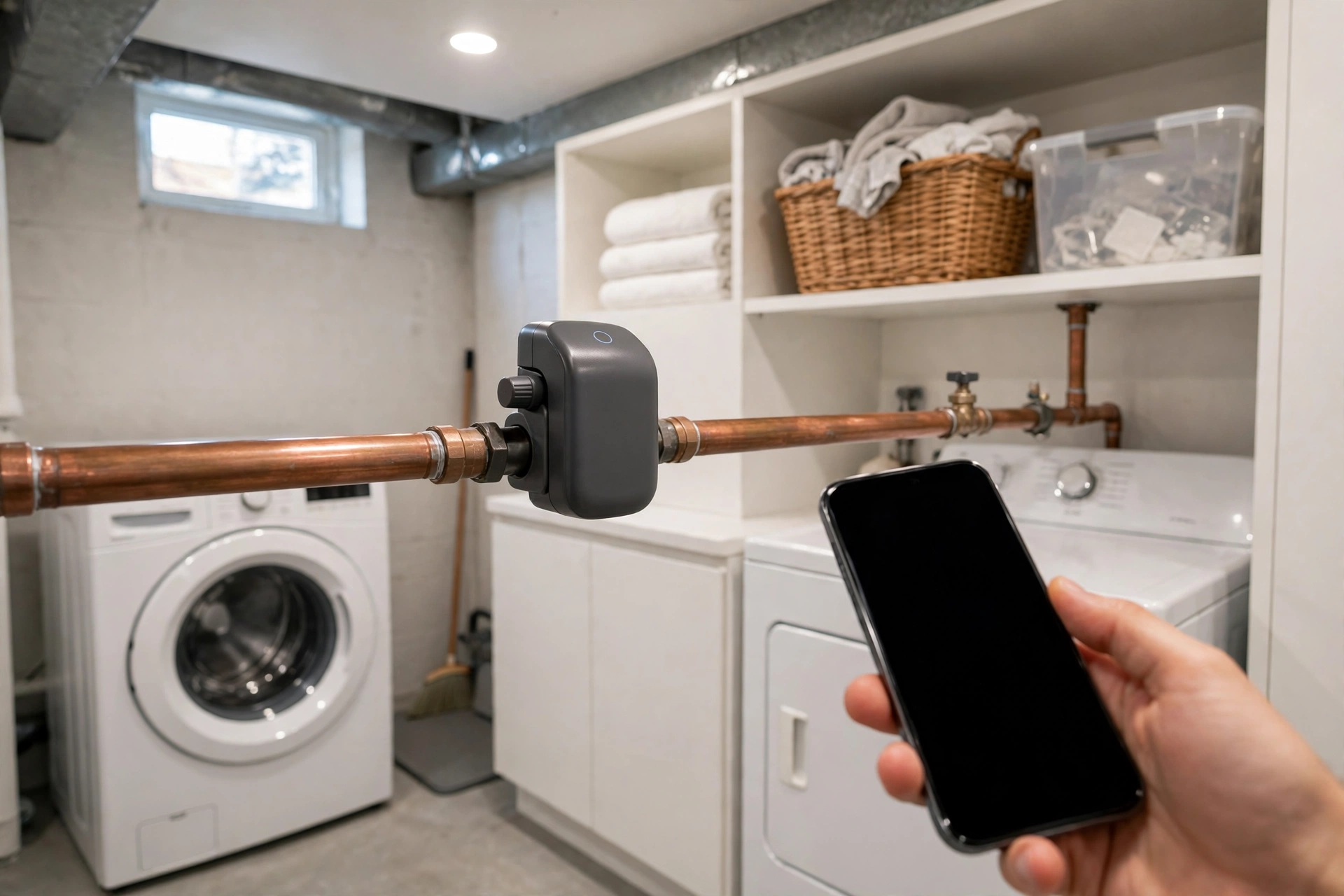
A burst washing-machine hose, a cracked supply line behind a toilet, or a water heater that gives way while you are at work can do far more damage in an hour than most homeowners expect. Water does not just wet a floor. It soaks drywall, warps wood, ruins stored belongings, and creates the damp conditions where mold can take hold. A smart water shutoff valve is designed for exactly that moment. Instead of only telling you that something is wrong, it can physically close your home’s water supply, or the supply to one appliance, so the leak stops getting worse while you arrange help.
This guide is for homeowners and renters who want to understand the category before they buy. It explains how shutoff valves work, the main types available in the United States, and what features matter. No product was tested for this guide, and no price or specification is presented as a current fact — always verify current specifications and pricing with the manufacturer before you decide.
Shutoff Valves Are Not the Same as Leak Detectors
The distinction matters, and it is the reason this guide is separate from a general leak-detector article. A leak detector is a sensor. Placed under a sink, beside a water heater, or near a washing machine, it watches for water, unusual humidity, or a temperature drop, and then sends an alert to your phone or sounds an alarm. That alert is valuable, especially if you are home and can act quickly. But if you are asleep, away for the weekend, or simply do not hear the notification, water keeps flowing.
A smart shutoff valve adds an action step. When a connected sensor detects water, or when the valve’s own flow monitoring detects an unusual pattern, the valve can close automatically. Some systems also let you close the valve from your phone, set it to close on a schedule, or shut off water remotely when you leave for vacation. In other words, a detector answers the question, “Is there a leak?” A shutoff valve answers the next question: “What happens now that there is one?”
That does not make detectors useless. In fact, most whole-home shutoff systems work best when paired with additional sensors in the places where leaks are most likely. The valve is the muscle, and the sensors are the eyes. If you already own leak sensors, check whether they can work with the shutoff system you are considering, or whether the system includes its own sensors. If you own nothing yet, a combined system is often simpler to manage than a collection of unrelated devices.
How a Smart Shutoff Valve Works
At its simplest, a smart shutoff valve sits on, or replaces part of, a water line and can turn that line off by command. How it does that depends on the design. An inline valve is installed directly in the pipe, usually near the main water shutoff for the home, and contains a motorized ball valve that opens and closes on command. A retrofit actuator clamps or bolts onto an existing manual shutoff handle, such as a quarter-turn ball valve, and turns that handle for you. A point-of-use valve is smaller and protects a single appliance, such as a washing machine or a dishwasher, rather than the whole house.
Flow-monitoring models add another layer. They measure how much water is passing through and learn, over time, what normal use looks like in your home. A long, continuous flow in the middle of the night, or a flow rate far above anything your household normally uses, can trigger an alert or an automatic shutoff. Other models rely mainly on remote water sensors and do not analyze flow at all. Both approaches can be useful, but they protect against different kinds of failure, so it is worth knowing which one you are buying.
Connectivity is the other half: most valves connect through Wi-Fi so you can receive alerts and close them remotely, but a physical manual override matters during a power or internet outage.
The Main Types Compared
Choosing a type is driven more by your plumbing and your home than by a brand name. The table below summarizes the trade-offs.
| Type | Best for | Main advantage | Main drawback |
|---|---|---|---|
| Whole-home inline valve | Homeowners who want one device to protect the entire house | Can stop a leak anywhere downstream of the valve | Usually needs plumbing work and a power source nearby |
| Retrofit valve actuator | Homes with an accessible quarter-turn main valve | Often easier to install without cutting pipe | Depends on the existing valve being in good working order |
| Point-of-use valve | A single high-risk appliance, such as a washing machine | Targeted protection with less disruption if it triggers | Does not protect the rest of the home |
| Sensor-triggered system | Homes where sensors are placed at known risk points | Shuts off only when a sensor actually detects water | A leak far from any sensor may go undetected longer |
| Flow-monitoring system | Households that want early warning of hidden leaks | Can catch slow, hidden leaks that never reach a floor sensor | Needs time to learn normal use and may need tuning |
What to Look for Before You Buy
Start with your main shutoff, not with a product page. Find it, check whether it is a quarter-turn ball valve or an older gate valve, note the pipe size and material, and see whether there is a power outlet nearby. Take a photo of the setup and keep it for reference when you compare models. A valve that does not fit your pipe, or that needs a power source you do not have, is not a bargain at any price.
Next, look at how the system detects a problem. Does it use floor sensors, flow monitoring, or both? How many sensors are included, and can you add more for the water heater, washing machine, dishwasher, and under-sink areas? Check whether alerts go to more than one person, because a shutoff alert that only reaches the homeowner is less useful when that person is traveling. Also ask what happens if the internet goes down. Some systems can still shut off automatically based on a local sensor signal, while others depend on a cloud connection for every decision. Local automatic shutoff is a meaningful safety advantage.
Power and reliability deserve the same attention. A plugged-in valve may need battery backup to keep working during an outage, and you should know whether it fails open or closed when power is lost.
Smart-home compatibility is a convenience, not the core safety feature. If you already use a voice assistant, check compatibility — our guide to voice assistants explains the main platforms, and our Matter explainer covers the newer standard for cross-brand devices.
Finally, think about false shutoffs and how easy it is to recover from one. A system that shuts off the water every time someone takes an unusually long shower will quickly be disabled or ignored, which defeats the purpose. Look for adjustable thresholds, an easy way to reopen the valve, and clear alerts that explain why it closed. A system you trust and leave enabled is worth more than a more sensitive system that gets switched off in frustration.
Installation: What to Expect
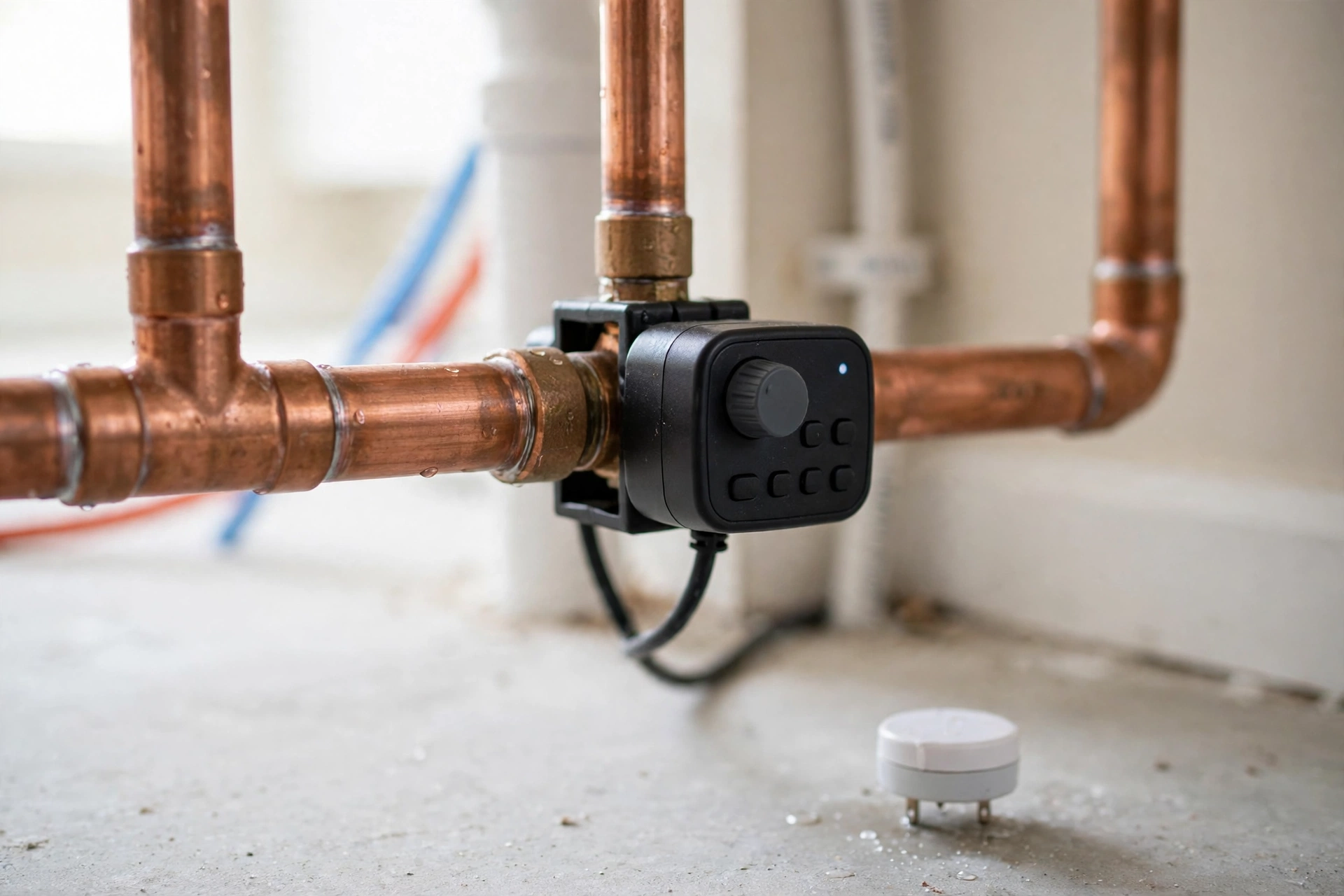
Installation difficulty varies widely by type, and it is one of the biggest hidden costs in this category. A retrofit actuator on an accessible, healthy quarter-turn valve is often a do-it-yourself job for a confident homeowner, though you should still follow the manufacturer’s instructions closely and test the valve after installation. A point-of-use valve for a washing machine is similarly straightforward in many homes, provided the connections match.
An inline whole-home valve is a different matter. Cutting into the main water line, even in a modern home with accessible plumbing, is plumbing work with real consequences if it goes wrong. Many homeowners will sensibly hire a licensed plumber for this step, and the labor cost should be part of your budget from the start, not a surprise after delivery. If you live in a condo or a home with a shared water supply, check your building’s rules and whether you are even permitted to modify the main line before you buy anything.
Plan the sensor layout at the same time. The most useful locations are under the kitchen sink, beside the dishwasher, behind the washing machine, near the water heater, and under bathroom sinks and toilets. Sensors work best where water would naturally pool, and should be easy to reach for testing.
Which Type Should You Choose?
If you own a single-family home and want the broadest protection, a whole-home valve — inline or retrofit, depending on your plumbing — paired with sensors at the main risk points is the most complete option. It protects against the widest range of failures and gives you one place to shut off water remotely, which is especially valuable if you travel or own a second home.
If you rent, or if plumbing work is not practical, start with the highest-risk appliance, such as the washing machine or water heater, and check your lease or building rules first.
If your main worry is a hidden, slow leak inside a wall — the kind you discover only when a stain appears or a bill jumps — a flow-monitoring system deserves priority, because floor sensors cannot see water that never reaches the floor. If your main worry is a sudden burst while you are away, a sensor-triggered automatic shutoff is the more direct answer. Many households will find that a system combining both approaches, even if it costs more upfront, is the one they actually leave enabled and trust.
Whatever you choose, buy for your plumbing first, your household second, and the app features last. A valve that fits, is installed correctly, and is tested regularly will protect you better than a feature-rich model that is poorly installed or frequently disabled.
Frequently Asked Questions
Do I still need leak sensors if I have a smart shutoff valve?
In most homes, yes. The valve is the action, but sensors tell it where to act, especially for leaks that do not change the home’s overall water flow enough to trigger a flow monitor. Place sensors at the water heater, washing machine, dishwasher, and under sinks, and test them regularly.
Can a smart shutoff valve stop a leak while I am on vacation?
That is one of its main strengths, provided the system is powered, connected, and set to shut off automatically. Test automatic shutoff before a long trip, and make sure alerts reach at least one other trusted person as a backup.
Will it shut off my water during normal use?
It should not, if thresholds are set sensibly. Flow-monitoring systems learn your normal patterns and may need an adjustment period, and a long irrigation run or filling a large bath can look unusual at first. Choose a system with adjustable thresholds and a simple way to reopen the valve, and review any false shutoffs rather than disabling the device.
Do I need a plumber to install one?
It depends on the type. Retrofit actuators and many point-of-use valves are designed for confident do-it-yourself installation, while inline whole-home valves usually involve cutting pipe and are best left to a licensed plumber. When in doubt, hire a professional. A small installation cost is far cheaper than a plumbing failure.
What happens if the power or internet goes out?
It depends on the model. Some valves keep local automatic shutoff working on battery backup, some can only be operated manually during an outage, and some depend on a cloud connection. Check the manufacturer’s description of outage behavior before you buy, and keep your manual shutoff accessible as a backup in all cases.
Is a smart shutoff valve worth it for an older home?
Often, yes, because older plumbing and aging hoses carry higher leak risk. Have a plumber inspect the main shutoff and pipe condition first, and let that inspection guide whether a retrofit or inline model makes sense.
Final Thoughts
A smart water shutoff valve is not the flashiest smart-home device. Its job is quieter and more important: to limit damage after something goes wrong, especially when no one is home to notice. Choose a type that fits your plumbing, pair it with sensors in the right places, install it properly, and test it regularly.
For a broader view of how smart-home devices fit together, start with our guide to the best smart home devices, and if you want to understand the connectivity behind them, our Thread explainer covers the mesh technology many newer devices rely on. Verify current specifications, compatibility, and pricing with the manufacturer before you buy, and if your plumbing is unusual or you are unsure about installation, a licensed plumber is the right call.