Best Indoor Air Quality Monitors in 2026: CO2, Radon, PM2.5 and Wildfire Smoke
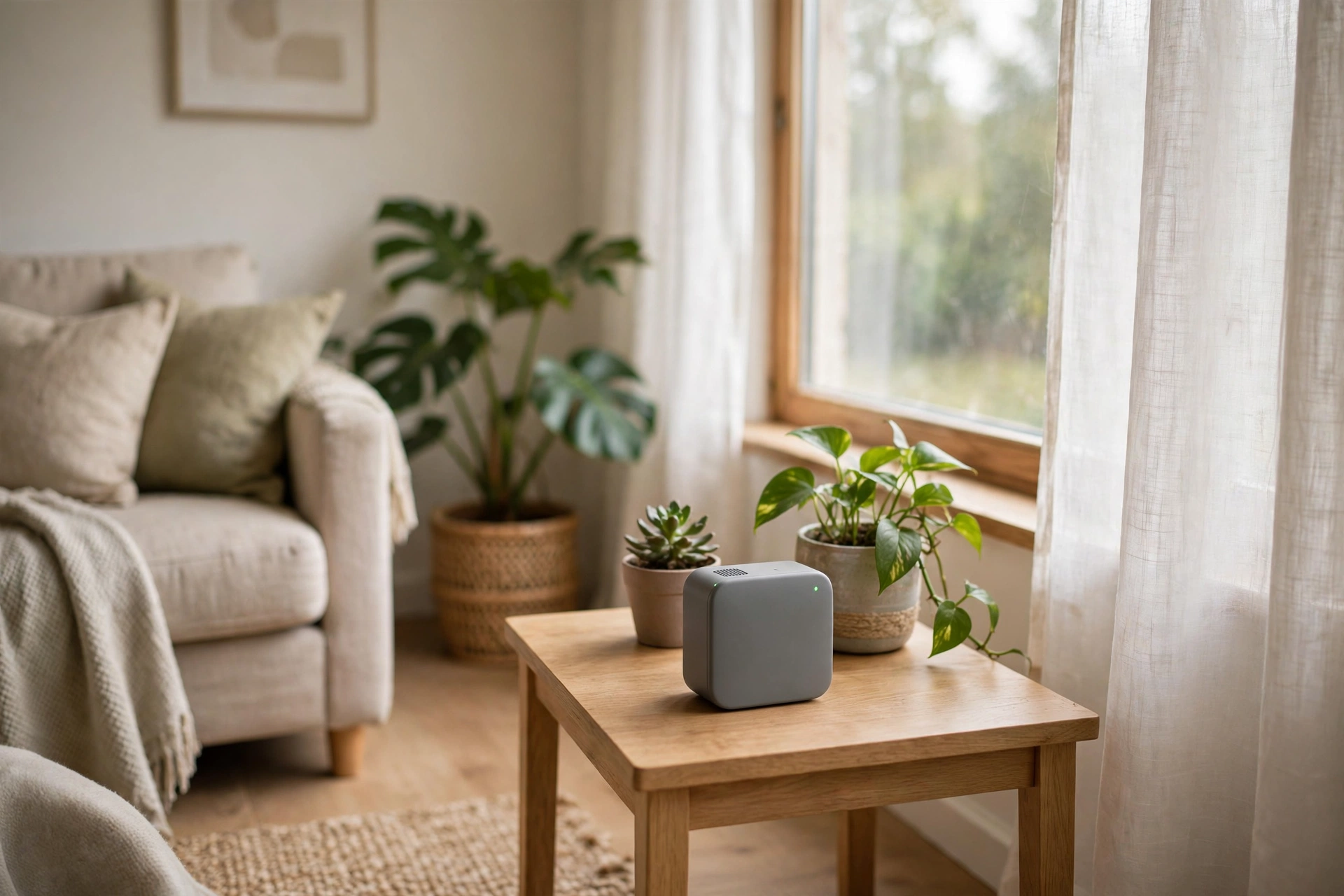
Most of us spend a large share of each day indoors, yet the air inside a home is invisible, and problems often announce themselves only indirectly: a stuffy bedroom in the morning, a headache after a long cooking session, a smoky smell during wildfire season, or a musty odour that never quite goes away. An indoor air quality monitor is a device that measures that invisible air and turns it into numbers you can read, trends you can follow, and alerts you can act on. It does not clean the air. That job belongs to a purifier, a ventilation system, or simply opening a window when outdoor air is cleaner. Understanding that distinction is the starting point for choosing well, because a monitor and a purifier solve different problems, and many households benefit from understanding their air before they spend money on cleaning it.
This guide is for US households that want to understand what is in their indoor air and what to do about it. It covers the main pollutants a home monitor can measure, including carbon dioxide, radon, fine particles, volatile organic compounds, temperature, and humidity, and it explains wildfire smoke in particular, because smoke events have become a recurring concern in many parts of the country. It does not claim any product was tested by this site, and it does not quote specific prices, sensor accuracy figures, or health thresholds as verified facts. Where health guidance matters, such as radon, readers should check current guidance from relevant US authorities and, where appropriate, seek professional testing or advice. Use this guide to decide what you need to measure, where to measure it, and how to act on the results.
Monitors vs Purifiers: Different Jobs, Often Both Useful
A monitor measures. A purifier cleans. That simple sentence prevents the most common buying mistake. A monitor with a display that shows rising particle levels during cooking tells you that cooking produces particles and that ventilation helps; it does not remove those particles. A purifier with a filter can reduce particles in a room, but without a monitor you may not know whether it is running at the right time, in the right room, or at a useful speed. Some purifiers include a basic built-in sensor, but a dedicated monitor usually measures more pollutants, shows longer trends, and can be placed where you actually spend time, rather than where the purifier happens to sit.
Carbon Dioxide: The Stuffy-Room Signal
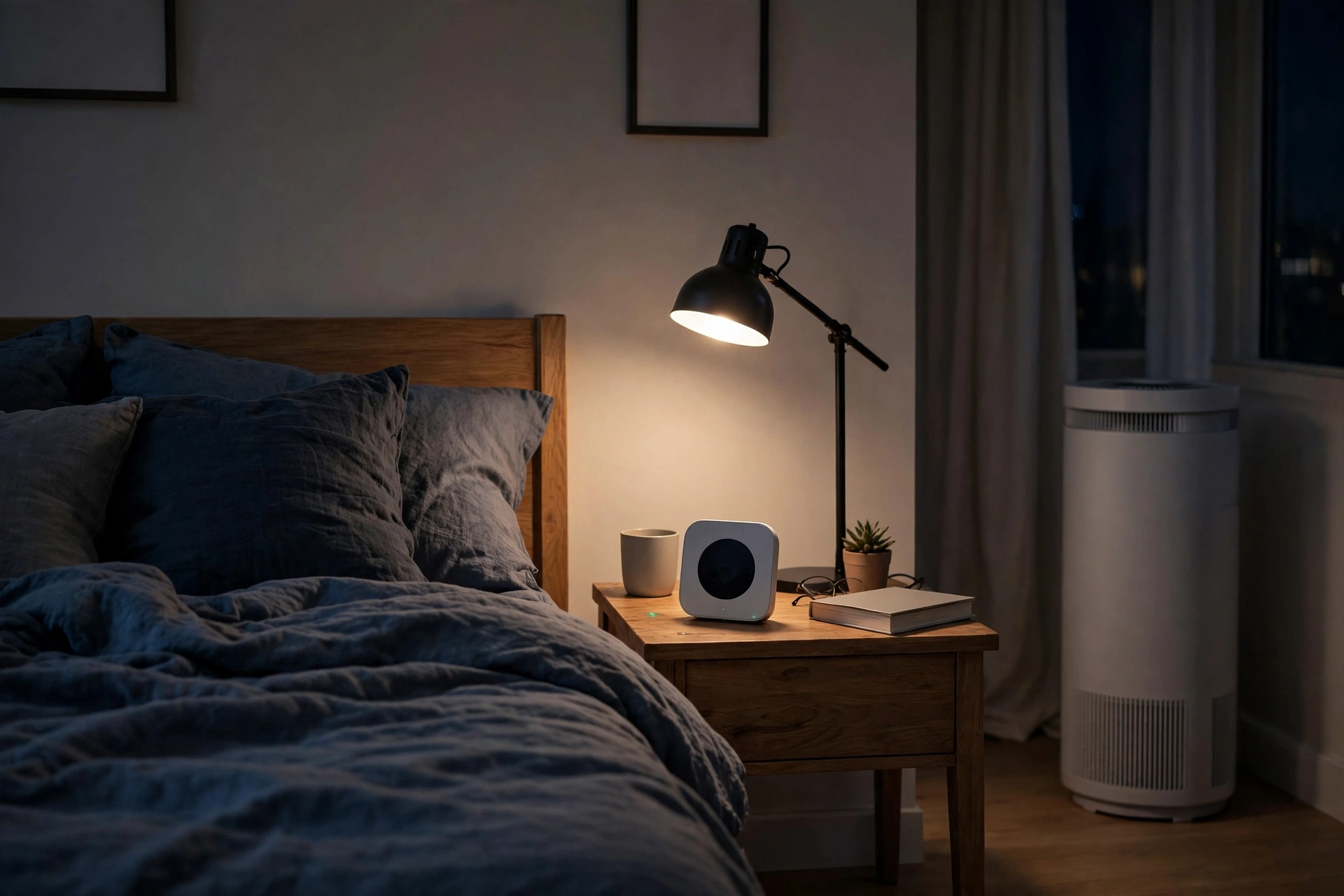
Carbon dioxide, or CO2, is exhaled with every breath, so indoor CO2 rises when people gather in a closed room and falls when fresh air enters. High indoor CO2 is best understood as a ventilation signal: it tells you that fresh air is not replacing stale air quickly enough. A bedroom with the door closed overnight, a home office during a long video call, or a classroom-style gathering in a living room can all show rising CO2, and the familiar feeling of stuffiness, difficulty concentrating, or drowsiness often follows. A CO2 monitor makes that feeling visible, which is useful because stuffiness is easy to dismiss until you see a clear overnight pattern.
Radon: The Long-Term, Invisible Risk
Radon is a naturally occurring radioactive gas that comes from soil and rock and can enter homes through cracks in floors, gaps around pipes, and other openings in the foundation. It is colourless and odourless, so it cannot be detected by smell or by sight, and it is the indoor air pollutant where a monitor, or a proper test, matters most, because without measurement there is no way to know whether a home has a problem. Radon levels vary by geology, by house construction, and even by season and weather, so a single short reading is less informative than a pattern over time.
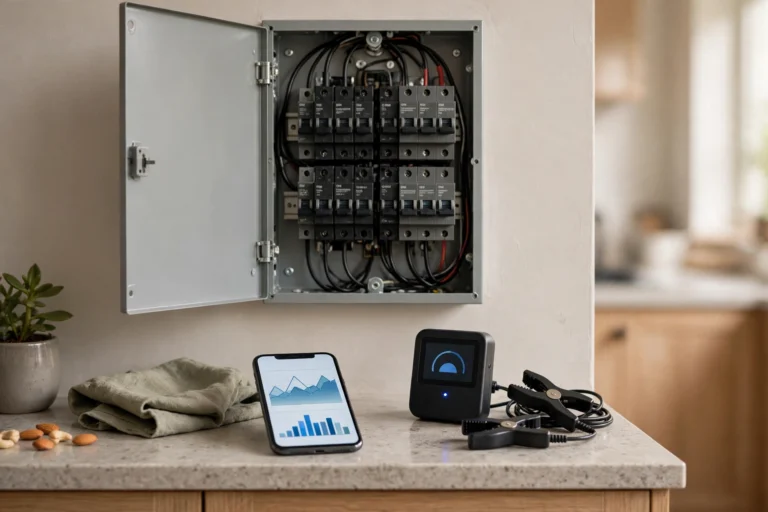
A continuous radon monitor, which measures over days, weeks, and months, gives a much better picture than a one-off test kit, because it shows how levels change with weather, ventilation, and heating. That long-term view is what matters for decisions about mitigation, which is the term for systems, often involving a fan and pipework, that reduce radon entry into a home. If a monitor shows persistently elevated radon, the next step is not a purifier, which does not address radon, but professional advice and, where recommended, a mitigation system installed by a qualified professional. Readers should check current guidance from relevant US authorities on radon levels, testing, and mitigation, and should not rely on a single number quoted in a buying guide, because guidance and local risk vary and are updated over time.
PM2.5, VOCs, Temperature, and Humidity
Fine particles, known as PM2.5, are tiny particles small enough to be inhaled deeply into the lungs. Indoors, they come from cooking, especially frying and grilling, from candles and fireplaces, from dust, and from outdoor smoke entering the home. A PM2.5 monitor shows spikes in real time, which is immediately useful: you can see cooking raise particle levels, see them fall when a range hood or purifier runs, and see them rise again during a smoke event. That real-time feedback teaches habits, such as running the range hood for longer after cooking, that a monthly average never would.
Volatile organic compounds, or VOCs, are gases released by paints, cleaning products, new furniture, adhesives, and some personal care products. A VOC sensor gives a general indication of total VOCs, rather than identifying a specific chemical, so treat its reading as a relative signal: a sharp rise after cleaning or painting tells you ventilation is needed, even if the sensor cannot name the compound. Some people are more sensitive to VOCs than others, and a monitor helps identify which products or activities trigger a rise in your home, so you can change products, improve ventilation, or store strong-smelling items elsewhere.
Wildfire Smoke: A Special Case for US Homes
Wildfire smoke has changed indoor air from a background concern into a seasonal emergency for many US households, including areas far from any fire. Smoke contains fine particles that can enter homes through gaps, vents, and every opening of a door, and it can keep indoor particle levels high even with windows closed. During a smoke event, a PM2.5 monitor becomes a practical tool, not just a curiosity: it tells you whether your home is actually protecting you, whether a purifier is keeping up, and whether a room you thought was safe is in fact smoky.
Comparison: What Different Monitors Measure
| Monitor type | Measures | Best for | Main limitation |
|---|---|---|---|
| CO2-focused monitor | CO2, often temperature and humidity | Bedrooms, offices, stuffiness and ventilation | Does not measure particles or radon |
| Particle-focused monitor | PM2.5, sometimes larger particles | Cooking, smoke, purifier effectiveness | Does not measure gases such as CO2 or radon |
| Multi-pollutant monitor | CO2, PM2.5, VOCs, temperature, humidity | Whole-picture view for most homes | VOC reading is general, not chemical-specific |
| Radon monitor | Radon over days to months | Long-term radon trends and mitigation decisions | Needs time for a reliable average; not instant |
| Combined monitor | Several pollutants including radon | Homes that want one device for most concerns | May cost more; check which sensors are included |
What to Do With What You Find
Which Monitor Should You Choose?
Choose by pollutant first, by features second, and by brand last. List the pollutants you actually need to measure: CO2 for stuffiness, PM2.5 for cooking and smoke, radon if you have never tested or live in an area where radon is a known concern, VOCs if new products, painting, or cleaning chemicals are a regular part of your home, and humidity if mould or condensation is a worry. That list decides the sensor set you need, and it will immediately rule out many models that look similar but measure different things.
For wider smart home context, the overview of the best smart home devices shows where air monitoring fits alongside other home systems, and the guides to Matter and voice assistants help if you want air data to work with the rest of your smart home, for example by showing readings on a smart display or triggering a purifier through an automation. Air monitoring is a quiet purchase: it does not light up a room or lock a door, but it gives you evidence about the air you breathe every day, and that evidence is the foundation for healthier, more comfortable decisions at home.
Frequently Asked Questions
What is the difference between an air quality monitor and an air purifier?
A monitor measures air pollutants and shows you readings and trends. A purifier removes particles, and in some designs gases, from the air in a room. They do different jobs, and many households use both: the monitor tells you what is in the air and whether the purifier or ventilation is working, and the purifier does the cleaning. A purifier alone will not tell you about CO2 or radon, and a monitor alone will not clean the air.
Do I need a radon monitor if my home has never been tested?
Radon cannot be seen or smelled, so without measurement you cannot know whether a home has elevated levels. A continuous radon monitor gives a long-term trend, which is more useful than a single short test. If readings are persistently elevated, seek professional advice and check current US guidance on testing and mitigation. Professional testing may be recommended, especially when buying or selling a home.
Can a monitor help during wildfire smoke?
Yes, especially a monitor that measures fine particles. It shows whether smoke is entering your home, whether a purifier is keeping particle levels down, and whether a clean-air room is working. During smoke, also watch CO2, because a tightly closed home can become stuffy, and follow local air quality guidance on when to stay indoors and when it is safe to ventilate again.
Where should I place an indoor air quality monitor?
In a regularly used room, at breathing height, away from windows, doors, cooking steam, direct sunlight, and the direct outlet of a purifier or heater. A bedroom is a good starting point, because you spend a long continuous period there. Avoid hallways, the top of a purifier, or a spot next to an often-open window, because those locations do not represent the air you actually breathe.
How accurate are consumer air quality monitors?
They are useful trend tools, but they are not laboratory instruments. Readings can vary between models, drift over time, and be affected by humidity and placement. Trends within one device, such as nightly CO2 rises or cooking particle spikes, are more reliable than comparing absolute numbers across brands. Follow the manufacturer’s guidance on calibration and sensor lifespan, and check placement before assuming a device has failed.
Should I buy one monitor or one for each room?
Start with one monitor in the room where you spend the most time, usually the bedroom, and use it to learn your home’s patterns. Move it between rooms for a few days if you want to compare. If you find different rooms behave very differently, or if you want continuous monitoring in a bedroom and a living area during smoke season, additional monitors become worthwhile. One well-placed monitor used regularly is better than several monitors that are never checked.
An indoor air quality monitor will not, by itself, make your air cleaner, but it will make your air visible, and visibility changes decisions. Choose the pollutants that matter to your home, place the monitor where you actually live, read trends rather than single numbers, and act on what you find, whether that is ventilation, filtration, humidity control, or professional radon advice. That simple loop, measure, act, and measure again, is the real value of a monitor, and it is a practical step toward a healthier home in any US climate, from wildfire country to a tightly sealed winter home.