Matter Smart Home Explained: Complete Guide for 2026
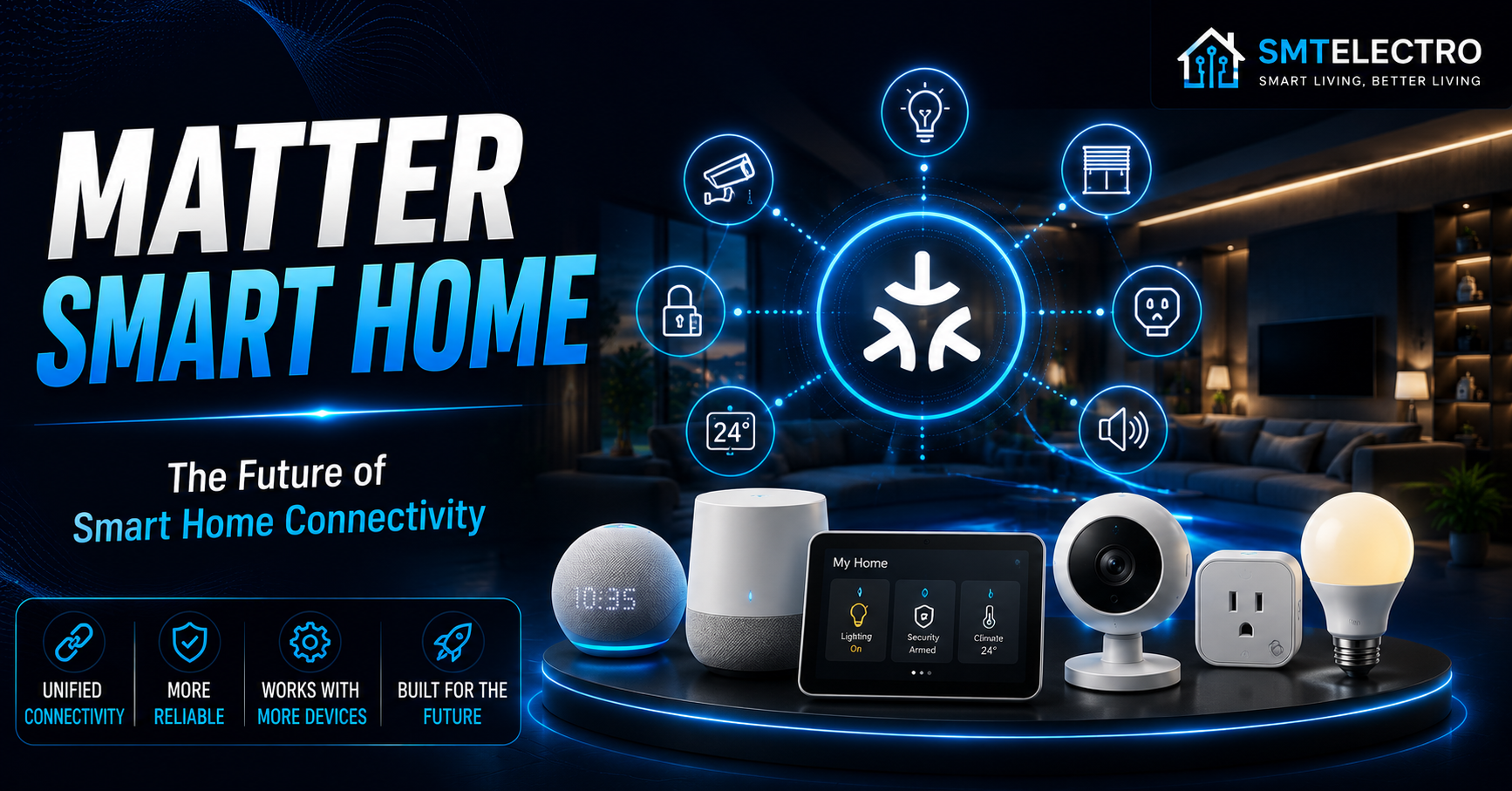
Learn what Matter Smart Home is, how it works, its benefits, supported devices, and why it is changing the future of smart home technology in 2026.
Matter Smart Home Explained: Everything You Need to Know in 2026
Smart home technology has become more advanced than ever, allowing homeowners to control lights, thermostats, security cameras, locks, and appliances with a smartphone or voice assistant. However, one of the biggest challenges has always been compatibility. Many devices only work with specific platforms, making it difficult to build a seamless smart home.
This is where Matter comes in.
Matter is a new smart home connectivity standard designed to make smart devices work together regardless of the manufacturer. Instead of worrying whether a product supports Google Home, Amazon Alexa, or Apple HomeKit, Matter creates a common language that allows compatible devices to communicate effortlessly.
Major technology companies, including Apple, Google, Amazon, Samsung, IKEA, Philips Hue, and many others, support Matter. This widespread industry backing makes it one of the most important developments in smart home technology.
Whether you’re building your first smart home or upgrading an existing setup, understanding Matter can help you make smarter buying decisions and future-proof your home. In this guide, we’ll explain how Matter works, its key benefits, supported devices, and whether it’s worth choosing Matter-compatible products in 2026.
Quick Overview
| Feature | Matter Smart Home |
| Type | Smart Home Connectivity Standard |
| Launched | 2022 |
| Latest Adoption | Expanding rapidly in 2026 |
| Supports | Google Home, Amazon Alexa, Apple HomeKit, Samsung SmartThings, and more |
| Best For | Universal smart home compatibility |
| Internet Required | Not always for local control |
| Security | Strong encryption and secure device communication |
What Is Matter Smart Home?
Matter is an open smart home standard created to solve one of the biggest problems in home automation: device compatibility.
Before Matter, buying smart home products could be confusing. A smart light bulb might work with Google Home but not Apple HomeKit, while a smart lock could support Alexa but not Google Assistant. As a result, users often had to check compatibility labels before every purchase.
Matter changes this by providing a common communication standard that allows certified smart devices to work across multiple ecosystems. If a product carries the Matter logo, it’s designed to integrate with supported platforms without requiring separate versions for each ecosystem.
For homeowners, this means more flexibility when choosing devices and fewer compatibility headaches.
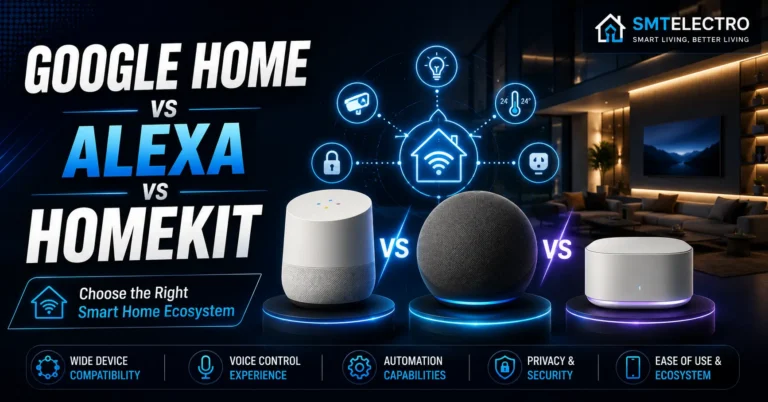
Google Home vs Alexa vs HomeKit: Which Is Better in 2026?
Why Was Matter Created?
The smart home market has grown rapidly over the past decade, but it has also become fragmented. Different brands developed their own ecosystems, forcing users to stay within a single platform or deal with complicated setups.
Matter was introduced to address these challenges by:
- Improving compatibility between smart home devices
- Simplifying setup and installation
- Enhancing security
- Reducing dependence on proprietary ecosystems
- Giving users more freedom when selecting products
Instead of competing standards creating confusion, Matter provides a shared foundation that benefits manufacturers and consumers alike.
How Does Matter Work?
Matter acts as a universal communication protocol that allows compatible devices to exchange information regardless of the brand.
When you add a Matter-certified device to your smart home, it can be recognized by supported ecosystems such as Google Home, Amazon Alexa, or Apple HomeKit. Once connected, you can control the device using your preferred app or voice assistant.
Matter also supports local communication, meaning many commands can be processed within your home network instead of relying entirely on cloud servers. This improves speed, reliability, and privacy.
The standard works alongside technologies like Wi-Fi, Ethernet, and Thread, ensuring efficient communication between devices.
Who Developed Matter?
Matter is maintained by the Connectivity Standards Alliance (CSA), an organization that brings together hundreds of technology companies to develop open standards for connected devices.
Some of the biggest companies supporting Matter include:
- Apple
- Amazon
- Samsung
- IKEA
- Philips Hue
- LG
- TP-Link
- Aqara
- Signify
The collaboration between these companies is one of Matter’s greatest strengths, as it encourages broader compatibility and a more consistent smart home experience.
Key Benefits of Matter
1. Better Compatibility
One of Matter’s biggest advantages is that it allows certified devices to work across multiple smart home ecosystems. This gives users more freedom when choosing products and reduces the risk of buying devices that won’t integrate with their existing setup.
2. Easier Setup
Matter simplifies the installation process by making it easier to add compatible devices. In many cases, setup involves scanning a QR code and following a few simple prompts within your preferred smart home app.
3. Faster Performance
Because Matter supports local communication, many commands can be executed without relying on the internet. This often results in faster response times and more reliable automation.
4. Enhanced Security
Security is built into the Matter standard. Devices use modern encryption and authentication methods to help protect communication between products and reduce the risk of unauthorized access.
5. Future-Proof Investment
As more manufacturers adopt Matter, users can expand their smart homes with greater confidence. Buying Matter-certified devices today increases the likelihood that they will remain compatible with future products and platforms.
Why Matter Is Important in 2026
The number of Matter-compatible devices continues to grow each year, making it easier than ever to build a connected home without worrying about ecosystem lock-in. For anyone planning to invest in smart home technology, Matter offers greater flexibility, improved reliability, and a smoother user experience.
As the standard matures, it’s expected to become the preferred choice for homeowners who want a smart home that is both powerful and easy to manage.
Matter vs Zigbee vs Z-Wave
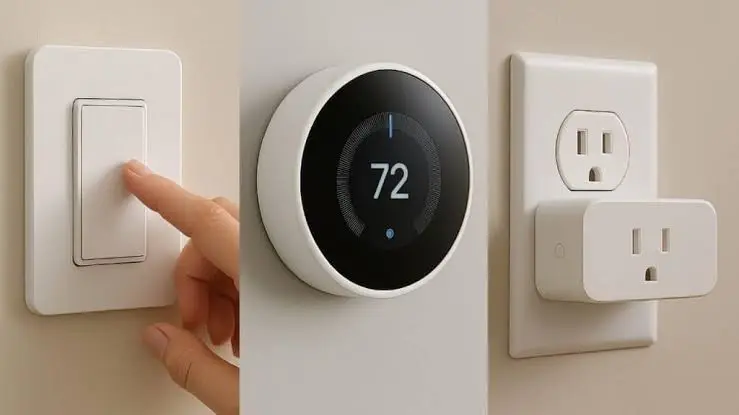
Before Matter, Zigbee and Z-Wave were two of the most popular communication protocols for smart home devices. While they are still widely used, Matter takes a different approach by focusing on universal compatibility instead of replacing existing technologies.
| Feature | Matter | Zigbee | Z-Wave |
| Device Compatibility | Excellent | Good | Good |
| Industry Support | Very High | High | High |
| Works with Major Platforms | Yes | Requires Hub | Requires Hub |
| Easy Setup | Excellent | Moderate | Moderate |
| Future Growth | Excellent | Good | Good |
Matter
Matter is designed to allow devices from different brands to work together without complicated configuration. It supports multiple ecosystems and aims to simplify smart home installation.
Zigbee
Zigbee is reliable and energy-efficient, making it a popular choice for smart lighting and sensors. However, it often requires a compatible hub.
Z-Wave
Z-Wave also provides reliable communication and excellent range, but like Zigbee, it typically depends on a dedicated hub.
Which One Is Better?
If you’re buying new smart home products in 2026, Matter is generally the better long-term choice because of its growing industry adoption and cross-platform compatibility.
Matter and Thread: What’s the Difference?
Many people confuse Matter and Thread, but they serve different purposes.
Think of it this way:
- Matter is the language that smart devices use to communicate.
- Thread is one of the networks that carries those messages.
Thread creates a fast, secure, and low-power mesh network, allowing compatible devices to communicate efficiently without depending entirely on Wi-Fi.
Many new Matter-certified devices also support Thread, resulting in faster response times and improved reliability.
Which Smart Devices Support Matter?
The list of Matter-compatible products continues to grow every month.
Popular device categories include:
Smart Lights
Many leading smart lighting brands now offer Matter-compatible bulbs, light strips, and switches.
Smart Plugs
Matter-certified smart plugs are becoming increasingly common and allow users to control appliances through different ecosystems.
Smart Locks
Several manufacturers now support Matter, making smart locks easier to integrate with Google Home, Alexa, and Apple HomeKit.
Smart Thermostats
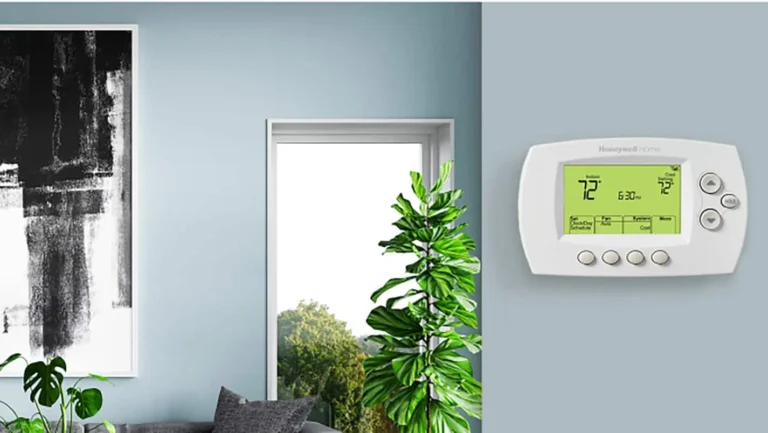
Modern thermostats are gradually adopting Matter support, making heating and cooling systems easier to manage.
Smart Sensors
Door sensors, motion detectors, and contact sensors are also joining the Matter ecosystem.
Smart Blinds
Motorized blinds and shades are beginning to support Matter for seamless automation.
Smart Speakers
Smart speakers themselves often act as Matter controllers, allowing users to manage compatible devices throughout the home.
Does Matter Work with Google Home?
Yes.
Google has fully embraced Matter and continues adding support across its smart home ecosystem.
With compatible devices, users can:
- Control lights
- Manage thermostats
- Lock doors
- Operate smart plugs
- Create routines
- Automate daily tasks
Google Home users can enjoy a much smoother setup process when purchasing Matter-certified devices.
Does Matter Work with Amazon Alexa?
Absolutely.
Amazon Echo devices increasingly support Matter, allowing users to connect compatible products without worrying about brand limitations.
Alexa users can continue using voice commands while benefiting from Matter’s simplified compatibility.
Does Matter Work with Apple HomeKit?
Yes.
Apple has integrated Matter into the Home app, making it easier than ever for iPhone users to connect compatible smart home devices.
This gives Apple users access to a broader selection of products than HomeKit previously supported.
Is Matter Secure?
Security is one of Matter’s biggest strengths.
Every Matter-certified device must meet strict security requirements before receiving certification.
Some important security features include:
- Device authentication
- Secure onboarding
- End-to-end encrypted communication
- Local control whenever possible
- Regular software updates from manufacturers
While no technology is completely immune to security risks, Matter provides a strong foundation for protecting connected homes.
Choosing the Best Thermostats for Your Home in 2026
Advantages of Matter
Works with multiple ecosystems
Easier installation
Faster local communication
Better long-term compatibility
Strong industry support
Improved privacy and security
Reduced dependence on proprietary systems
Future-ready technology
Limitations of Matter
Although Matter offers many benefits, it’s not perfect.
Some current limitations include:
- Older smart devices may require firmware updates.
- Not every existing smart product supports Matter.
- Some advanced manufacturer-specific features may still require the original app.
- Adoption is still expanding, so compatibility varies by product.
Despite these limitations, the ecosystem continues to improve rapidly as more manufacturers release Matter-certified devices.
Is It Worth Buying Matter Devices in 2026?
For most homeowners, the answer is yes.
If you’re starting a new smart home or replacing older devices, Matter-certified products provide greater flexibility and help protect your investment for the future.
Instead of being locked into a single ecosystem, you’ll have more freedom to expand your smart home as new products become available.
Buying Guide: How to Choose Matter-Compatible Devices
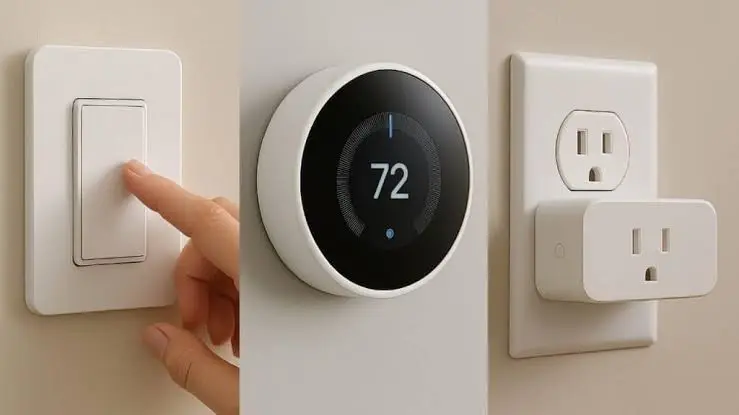
As more smart home products become Matter-certified, choosing the right device is becoming easier. However, not every product offers the same features or level of compatibility. Before making a purchase, keep these factors in mind.
1. Look for the Matter Logo
Always check the product packaging or official specifications for the Matter certification logo. This confirms that the device has passed compatibility and security requirements set by the Connectivity Standards Alliance (CSA).
2. Check Ecosystem Support
Although Matter improves compatibility, you should still verify that the product works with your preferred platform, whether it’s Google Home, Amazon Alexa, Apple HomeKit, or Samsung SmartThings.
3. Consider Your Existing Devices
If you already own several smart devices, choose Matter-compatible products that integrate well with your current setup. This will help create a more reliable and seamless smart home experience.
4. Prioritize Security
Select products from reputable brands that provide regular firmware updates and security patches. Keeping devices updated helps protect your home from potential vulnerabilities.
5. Think About Future Expansion
Choose devices that can easily be integrated into a growing smart home. Matter makes expansion much simpler, allowing you to add compatible products from different manufacturers without replacing your existing setup.
Common Mistakes to Avoid
Many first-time buyers make avoidable mistakes when building a smart home. Here are some of the most common ones.
Buying Devices Without Checking Compatibility
Not every smart device supports every ecosystem. Always verify compatibility before purchasing.
Ignoring Software Updates
Firmware updates often improve performance, security, and Matter compatibility. Keeping devices updated ensures the best experience.
Buying Only Based on Price
The cheapest device isn’t always the best value. Consider reliability, customer support, software updates, and long-term compatibility.
Mixing Too Many Platforms
Using multiple ecosystems can complicate automation and device management. Sticking with one primary platform usually provides a smoother experience.
FAQs
What is Matter Smart Home?
Matter is a universal smart home standard that allows compatible devices from different manufacturers to work together across major platforms such as Google Home, Amazon Alexa, and Apple HomeKit.
Do I Need a Matter Hub?
Not always. Many Matter devices work through compatible smart speakers, displays, or hubs that you may already own. Some products can communicate directly over your home network.
Does Matter Work Offline?
Many Matter functions support local communication, allowing devices to continue working even if your internet connection is temporarily unavailable. However, cloud-based features may still require internet access.
Can Existing Smart Devices Be Upgraded to Matter?
Some manufacturers have released firmware updates to add Matter support to existing devices, while older products may never receive compatibility. Check with the device manufacturer for official information.
Is Matter Better Than Zigbee?
Matter and Zigbee serve different purposes. Matter focuses on universal compatibility, while Zigbee is a communication protocol. For most new smart home setups in 2026, Matter offers greater flexibility.
Which Smart Home Platform Works Best with Matter?
Matter supports major ecosystems including Google Home, Amazon Alexa, Apple HomeKit, and Samsung SmartThings. The best choice depends on the devices you already use and your personal preferences.