Best Smart Blinds and Shades in 2026: The Complete Buying Guide (Including Retrofit Options for Renters)
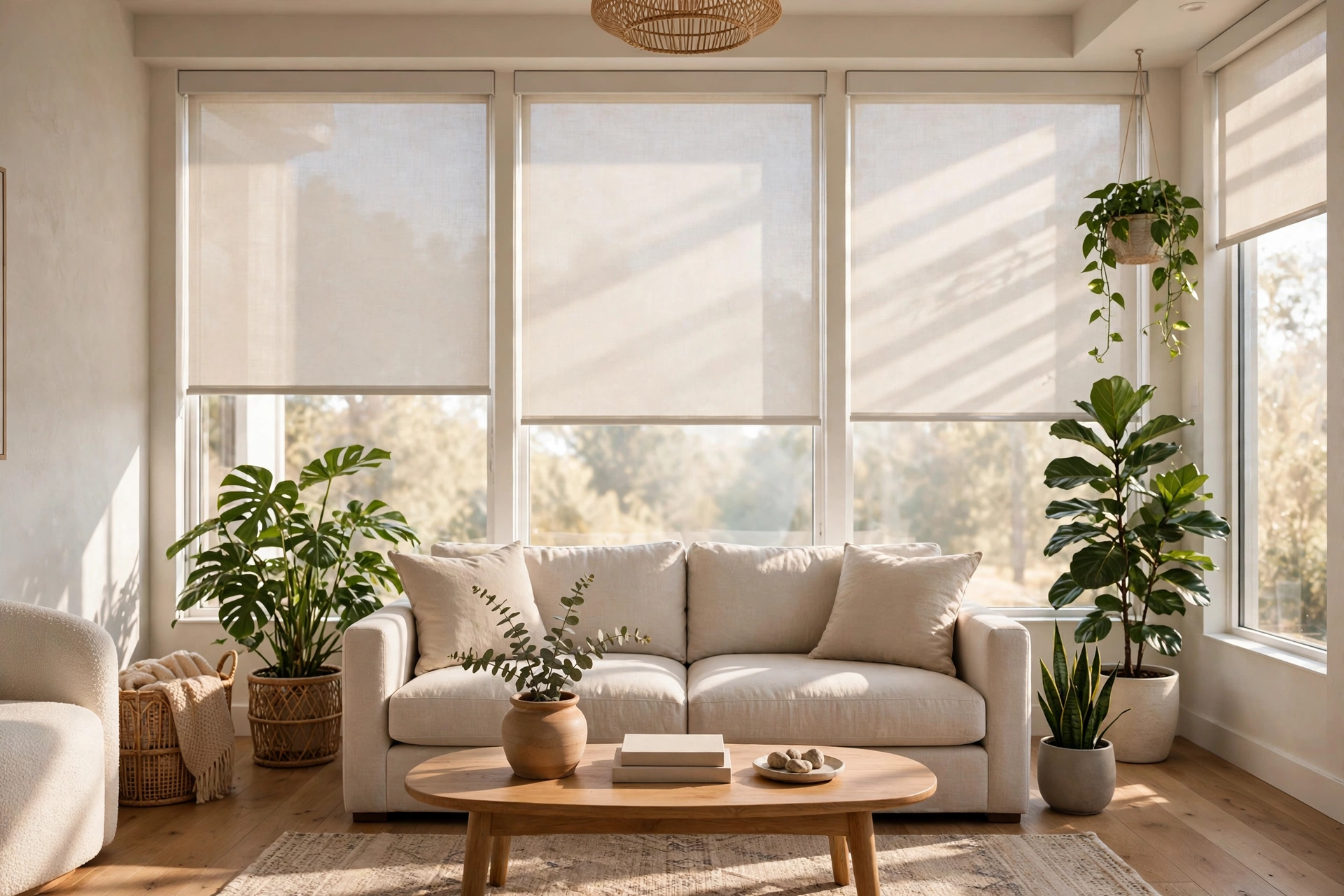
If you have ever come home to a hot, glaring living room, or fumbled for a blind cord in the dark, you understand the appeal of smart blinds. They open and close on a schedule, respond to voice or app control, and protect evening privacy while letting daylight in by morning.
A smart covering is not one product: it is fabric, a motor or retrofit device, a power source, and a control system. The right combination depends on your windows, lease, budget, and how much automation you actually want.
How Smart Blinds and Shades Actually Work
At their simplest, smart blinds and shades are ordinary window coverings with a motor added. A roller shade rolls up and down. A cellular shade, sometimes called a honeycomb shade, folds as it rises and can add a layer of insulation. A Venetian-style blind tilts its slats, and some models also raise and lower. A drapery motor pulls curtains along a track. In every case, the motor receives a command and moves the covering to a set position.
Control usually comes in layers: a phone app, a small remote, voice control, and schedules such as opening at sunrise and closing at sunset. Advanced routines can link shades to other devices, but a simple schedule may be all you ever need.
Connectivity varies: some shades use Wi-Fi or Bluetooth directly, while others use Zigbee, Z-Wave, or Thread through a hub or border router. If you already use a voice assistant or platform, shortlist shades that work with it natively. See our Matter guide and Thread guide.
The Main Types, and Where Each One Fits
Roller shades are the most common smart option: simple, suited to many windows, and available in light-filtering fabrics that preserve a view or blackout fabrics that block most light. Be honest about the trade-off: light-filtering fabric will not darken a bedroom, and blackout fabric blocks the view when closed.
Cellular shades suit rooms where insulation matters: their honeycomb pockets trap air and help drafty windows feel more comfortable. The trade-off is fabric care and weight on very wide windows.
Venetian-style blinds tilt their slats for fine light and glare control, which suits offices and street-facing rooms. The downside is dusting and extra moving parts.
Drapery motors suit wide windows and sliding doors, and let you keep existing curtains. They cost more per window and installation is more involved, so check track length, curtain weight, and motor limits before ordering.
Retrofit Motors vs Full Replacement
This is the most important fork, especially for renters. A full replacement is a complete shade with a built-in motor, sized for your window. It looks cleanest and offers the widest fabric choice, but costs more per window.
A retrofit motor motorizes a shade you already have, most commonly by pulling a beaded chain. Retrofit devices are generally far cheaper per window, often need no electrician, and can usually be removed when you move. They only fit compatible shades, may be visible, and depend on the chain being in good condition.
Retrofit first where existing shades are in good shape and the right size; replace fully where fabric is worn or the opacity or size is wrong. A mix across rooms is usually the most sensible way to spend money.
Renters: No-Drill, Low-Damage, and Move-Out Friendly
If you rent, start with your lease and, when in doubt, ask your landlord. Some leases allow small filled holes, while others forbid drilling into frames outright.
Tension-mounted shades press into the frame without screws and are the simplest renter-friendly replacement. Adhesive or clamp mounts are another option, but hold depends on frame material and shade weight, so check the manufacturer’s guidance for your frame type.
Plan for move-out from day one: keep original parts in a labeled bag, photograph the window first, and test that you can reverse the installation. Get written permission before permanently altering a landlord-owned blind.
Measuring, Light, Privacy, and Safety
Follow the measuring guide for the exact product you buy, because inside-mount and outside-mount measurements differ. Measure width in three places and height on both sides. Older windows are rarely square, and a shade ordered from one measurement can bind or leave a light gap.
Light and privacy are not the same goal. Sheer fabric gives daytime privacy while keeping a room bright, but at night people outside may see silhouettes. Blackout fabric gives strong nighttime privacy but blocks the view when closed.
Safety matters, especially with young children or pets. Cordless operation is a genuine safety advantage of motorized shades, since there is no looped cord to worry about. If you keep corded shades elsewhere, follow current US safety guidance for corded window coverings, keep cords out of reach of cribs and beds, and consider replacing the highest-risk coverings first, even before automating the rest of the house.
Power, Charging, Noise, and Control
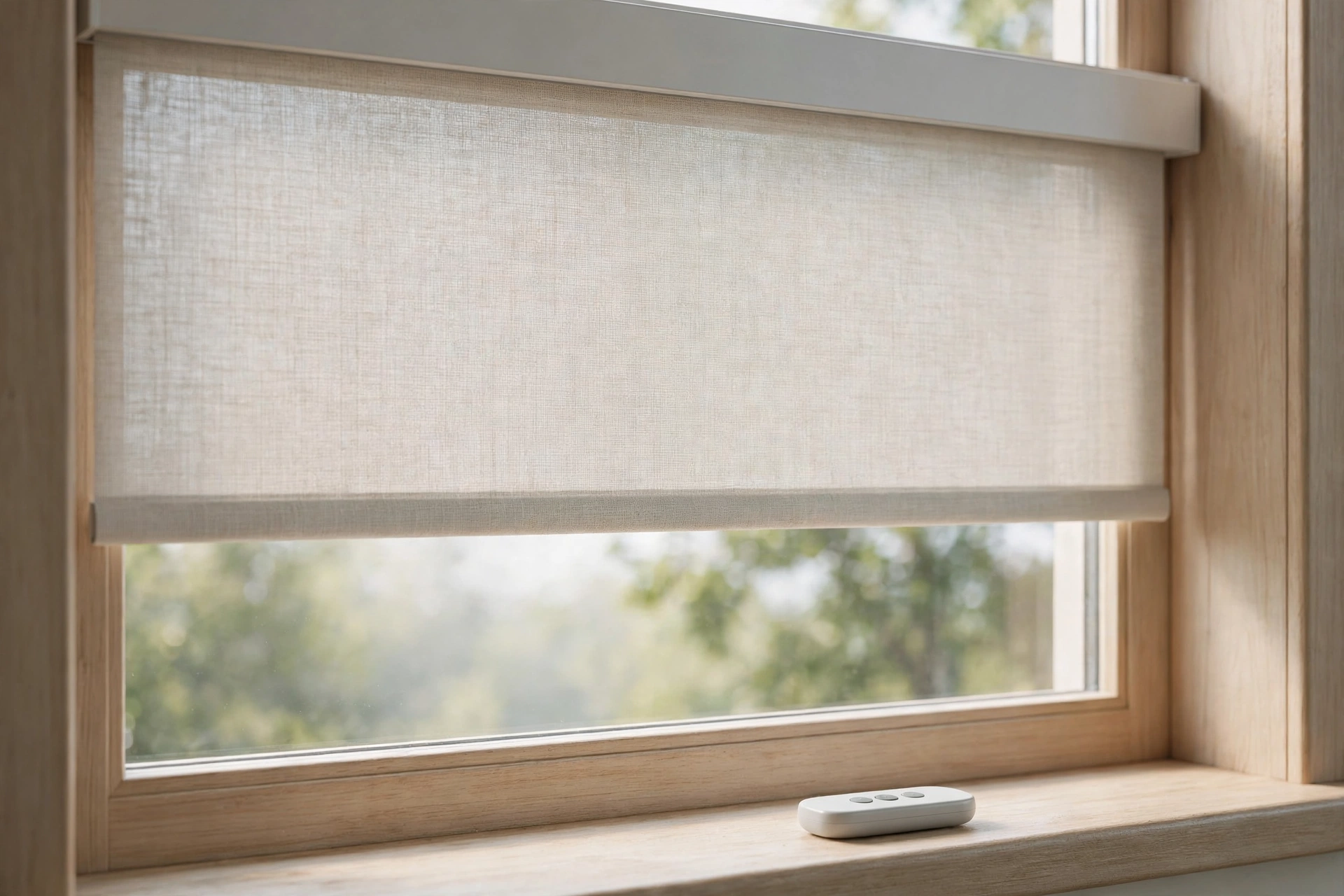
Smart shades are usually powered by a rechargeable battery, a plug-in supply, a wired connection, or a small solar panel that trickle-charges a battery. Rechargeable batteries suit rentals because they need no wiring, but charging frequency depends on size, fabric weight, and daily movements. Check how charging works for high windows: some systems use a reachable cable, others require removing the shade or battery.
Noise matters in bedrooms: motors vary, and heavier shades work harder. Check feedback on motor sound for your size and fabric, and use a slower setting if one is offered.
Control will shape daily use more than any single feature. Look for a reliable app, a physical remote for guests, and the voice assistant you already use. Schedules matter most: shades that open in the morning and close at dusk without anyone remembering. Prefer systems that keep basic local control if the internet goes down.
What Smart Blinds Cost, in General Terms
Costs vary widely. A retrofit motor is generally the lowest-cost way to motorize one window, while a full motorized shade costs more and rises with width, fabric, and custom sizing. Motorizing a whole house at once is a significant project, so a room-by-room approach is common.
Compare the complete cost, not just the shade: whether a hub is required and included, whether a remote or solar panel is an add-on, and what a replacement battery would cost later.
| Option | Best for | Main drawback | Renter-friendly? |
|---|---|---|---|
| Retrofit chain motor | Existing roller shades in good shape | Only fits compatible shades; visible device | Yes — often removable |
| Full motorized roller shade | Clean look; most windows | Higher cost per window | With tension or no-drill mount, often yes |
| Cellular smart shade | Insulation; bedrooms | Fabric care; weight on wide windows | Yes, if mounted without damage |
| Smart Venetian blind | Precise light and glare control | Dusting; more moving parts | Depends on mount |
| Drapery motor / track | Wide windows; sliding doors | Higher cost; more involved install | Rarely, unless track is temporary |
Which Should You Choose? A Practical Decision Path
Start with the window: what the room needs, whether the existing shade is worth keeping, and your constraints — rental rules, frame material, outlet access, and reach for charging.
If you rent and your shades are in good shape, try one retrofit motor in the room you use most. If you own and want a clean, long-term result, start with full motorized shades in bedrooms and street-facing rooms. If a window is rarely adjusted, leave it manual and spend the savings where it matters.
Before you order, run a final checklist: confirm the exact window measurements, the mount type, and whether a hub is needed; confirm the fabric opacity in both daylight and at night if privacy matters; confirm how the battery charges and whether you can reach it; and confirm the return policy in case the size or fabric is wrong. Ordering one shade first, rather than a whole house at once, makes it far easier to correct a measuring or fabric mistake before it becomes expensive. Keep the packaging until you have tested the shade through a full daily schedule.
Frequently Asked Questions
Do smart blinds work without a hub?
It depends on the product. Some shades connect directly over Wi-Fi or Bluetooth and need no separate hub for basic app and voice control. Others use Zigbee, Z-Wave, or Thread and need a hub or border router to reach your phone and voice assistant. Check the connectivity section for your exact model, and remember that a hub bought for shades can often serve other devices too.
Can renters install smart blinds without drilling?
Often, yes. Retrofit motors that attach to an existing shade, tension-mounted shades, and some clamp or adhesive mounts avoid drilling. Success depends on your frame, the shade’s weight, and your lease. Keep original hardware, photograph windows before installation, and get written permission if a product would permanently alter a landlord-owned covering.
How often will I need to charge battery-powered shades?
There is no single answer, because it depends on shade size, fabric weight, and daily movements. A lightly used shade in a small window will go far longer between charges than a large, heavy blackout shade that moves several times a day. Look for a charging method you can live with, rather than focusing only on a headline battery claim.
Are smart blinds safe for homes with children and pets?
Motorized, cordless operation removes the looped cords that pose the main risk with traditional blinds, which is a genuine advantage. Still, follow the manufacturer’s safety instructions, keep any remaining cords out of reach, and keep cords away from cribs, beds, and play areas. If child safety is your main motivation, prioritize cordless rooms first.
Do smart shades save energy?
They can help, but they are not a substitute for insulation, sealing drafts, or an efficient heating and cooling system. Closing shades on hot afternoons can reduce solar heat gain, and opening them on cold, sunny winter days can let warmth in, but the effect depends on climate, window orientation, and how consistently schedules run. Treat energy savings as a bonus, not a guaranteed payback figure.
What happens if the internet goes down?
Basic control should not disappear entirely with a good system. A physical remote, a wall control, or a schedule stored locally can usually still operate the shade. App control from outside the home and voice control through a cloud assistant, however, may pause until connectivity returns. If resilience matters, ask whether schedules and remote control keep working offline before you buy.
Smart blinds reward a patient approach: one room, the right fabric, a mount you can live with, and a control system that fits the home you already have. Start there, and the rest of the house can follow at a pace your budget and your lease allow.