Best Smart Garage Door Openers in 2026: Retrofit Kits vs Full Openers
A smart garage door opener answers a question every homeowner has asked at least once: did I close the garage door? It lets you check the door from your phone, close it from anywhere, get an alert if it opens unexpectedly, and give temporary access without handing out a remote or a code. This guide is for US homeowners and renters with garage access who are choosing between a retrofit kit that adds smart control to an existing opener, and a full replacement opener with smart features built in.
We have not tested specific models in a lab, and we do not quote prices, range figures, or battery figures as facts, because those vary by model, garage construction, and Wi-Fi coverage. Verify current specifications and compatibility for your exact opener model before buying. What this guide offers is a practical comparison: how each option works, where each one fits, and the safety and platform questions that matter more than any single feature.
How a Retrofit Kit Works
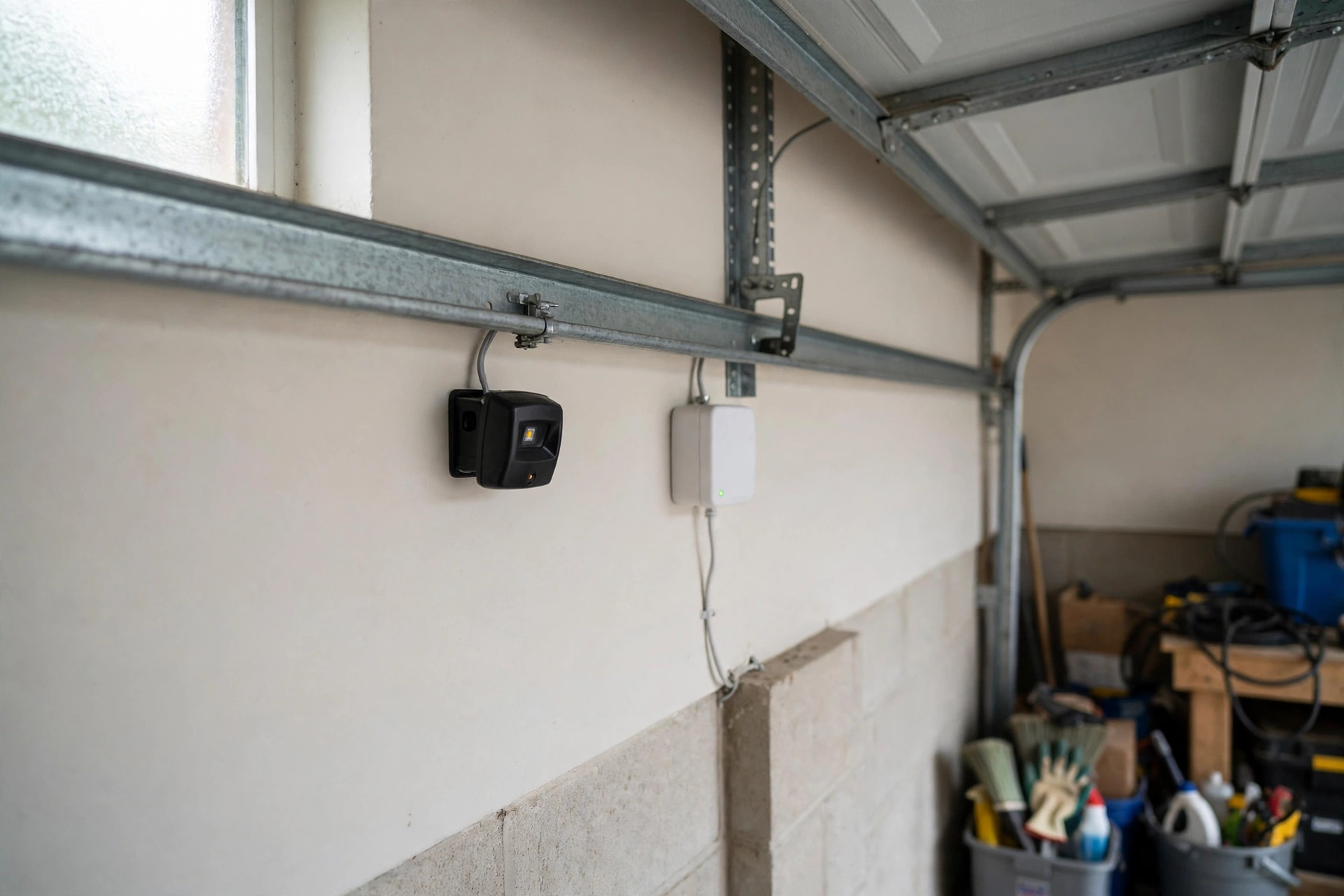
A retrofit kit adds a small controller and a door sensor to the opener you already have. The controller connects over Wi-Fi or a hub and tells the opener to open or close, usually through the wall-button terminals. The sensor reports real door status, not just the last command.
That sensor matters more than it first appears. Without it, a system can only guess: it sent a close command, so it assumes the door is closed. With a sensor, it knows. That distinction is important for alerts, for routines, and for peace of mind when you are away from home. When comparing kits, check how the sensor mounts, whether it needs a battery, and how it handles a door that stops partway.
Retrofit kits make most sense when your opener is in good working order and appears on the kit maker’s compatibility list. They are generally lower-cost and avoid replacing a working motor. If your opener is unreliable or missing modern safety features, smart control will not fix it.
When a Full Opener Is the Better Buy
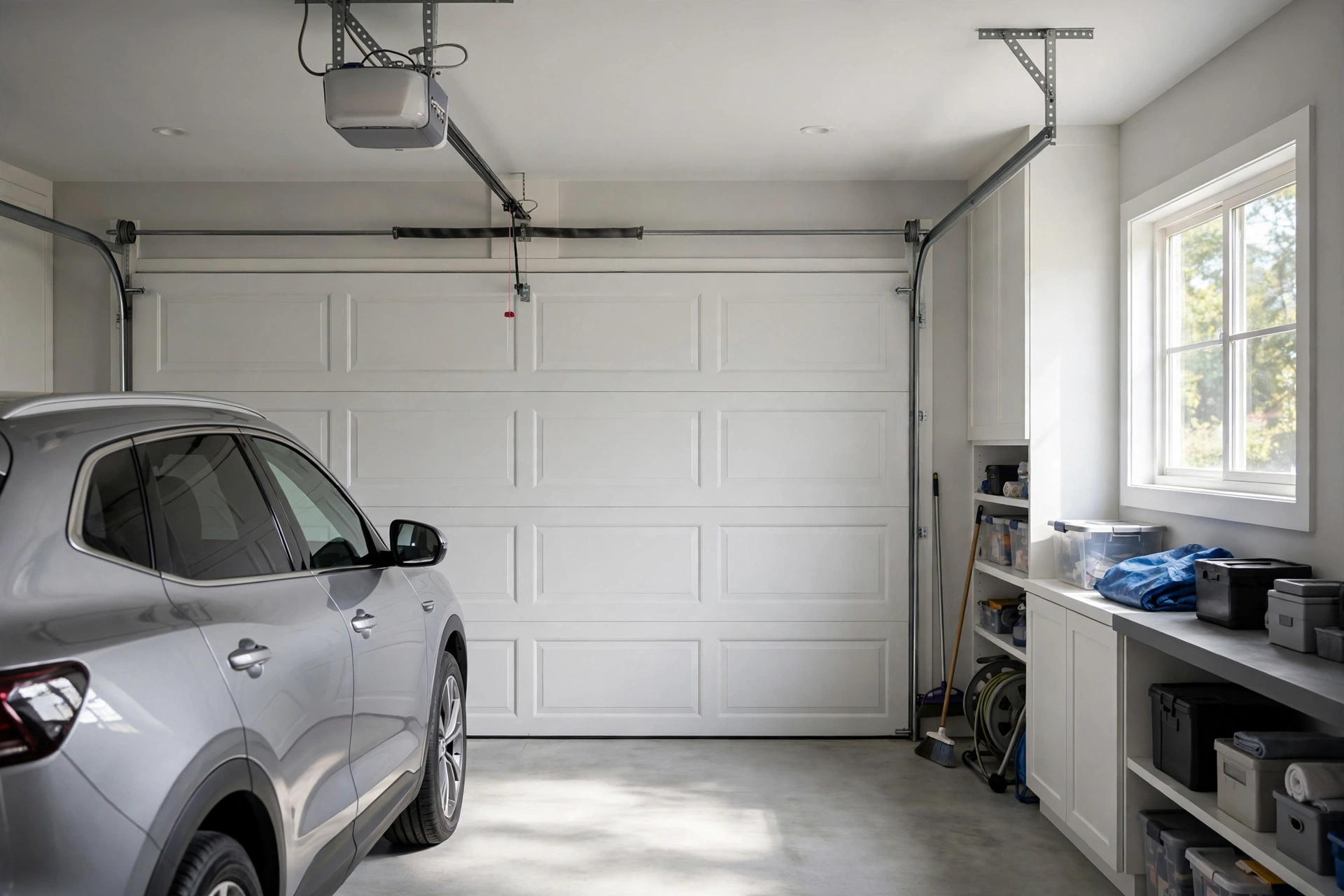
A full smart opener replaces the whole unit — motor, rail, and controls — with Wi-Fi and app control built in. That integration usually brings one app and support channel, plus features such as a camera or battery backup depending on the model.
The trade-offs are cost and installation effort. A full opener costs more, and installation means mounting the motor, fitting the rail, and adjusting travel and force limits. Many homeowners hire a professional, which adds cost but ensures safety systems are set correctly.
Drive type matters too: belt drives are generally quieter, which helps if a bedroom sits above the garage, while chain drives are often chosen for heavier doors and can be noisier. Verify door-size and weight limits before ordering.
Compatibility: The Check That Saves a Return
Check compatibility before buying anything. For a retrofit kit, find your opener’s brand and model number on the motor unit and check it against the kit maker’s list. Some older openers or proprietary wall controls need an adapter or are not supported.
Also check connectivity: most kits and openers rely on Wi-Fi, and garages often sit at the edge of coverage behind brick or metal. Test your phone’s signal near the opener first; a mesh node or access point may be needed.
Finally, check power and placement: a controller needs a nearby outlet, a sensor needs a secure spot on the door, and a camera needs a clear view.
Safety First: Sensors, Auto-Reverse, and Alerts
Garage doors are heavy, and safety features are not optional. Modern US openers include photoelectric sensors near the floor that reverse the door if the beam is broken, plus auto-reverse if the door hits an obstruction. Test both after installation and periodically.
Smart features add responsibility too. Remote closing means closing a door you cannot see, so use the camera and sensor status, and never close remotely if a person, pet, or vehicle may be in the way. Set alerts thoughtfully so routine alerts do not become noise you ignore.
Keep manual control working. Everyone in the household should know where the manual release is, how the wall button works, and what to do in a power outage. Smart control should add convenience on top of a safe, working door, never replace the basic safety habits that keep a garage safe.
Cameras: Useful, but Not a Substitute for Security
Some full openers include a built-in camera, and some retrofit setups pair with a separate garage camera. A camera is genuinely useful for a garage: you can see whether the door is closed, whether a delivery was left inside, or whether someone entered while you were away. It also helps when closing the door remotely, because you can check the view before sending the command.
A camera is not a complete security system. It does not lock the door or replace a secure side door, and storage may involve an ongoing fee. Verify whether storage is local, cloud-based, or both, and what features require payment, before paying for a bundled camera.
If you already have a security setup, think about how the garage fits it. See our guides to home security without a monthly fee and video doorbells without a subscription.
Battery Backup: Worth It in Many US Homes
Battery backup keeps an opener working during a power outage, so you are not locked out at night or in bad weather. Some full openers include it, some offer it as an add-on, and most retrofit kits do not add it: if the opener has no power, the kit cannot move the door.
If backup matters, check whether it is included or optional, what it powers, and how the manual release works after an outage. Batteries also need replacement after some years, so ask about replacement cost.
Platforms, Voice Control, and Automations
Most buyers will control a garage door through an app, and many will also want voice control or routines. Check which voice assistants and platforms a kit or opener supports natively before buying, rather than assuming a workaround will work smoothly. A garage door is also a security device, so voice control often requires an extra confirmation step, such as a spoken code, before it will open. That friction is deliberate, and it is worth keeping.
Automations can help: a routine that closes the door at bedtime, an alert if it stays open, or lights that turn on when it opens after dark. Keep automations conservative — prefer rules that close doors or send alerts, and leave opening to a deliberate tap or command, since location-based opening can trigger at the wrong time.
Cost and Installation, in General Terms
A retrofit kit is generally the lower-cost option, plus any adapter or connectivity help it needs. A full opener costs substantially more, and professional installation or battery backup can add further cost. Compare totals, not just the product page price.
A retrofit kit is often a project of an hour or two for a careful DIYer, plus testing. A full opener is longer, often half a day, and involves a heavy, spring-loaded door. Never adjust garage door springs without proper knowledge and tools.
| Option | Best for | Main drawback | Typical install |
|---|---|---|---|
| Retrofit kit | Working opener; lower budget | Depends on compatibility; no backup by itself | DIY, often 1–2 hours |
| Full smart opener | Old or failing opener; camera or backup wanted | Higher cost; heavier install | DIY or professional, often half a day |
| Retrofit + separate camera | Smart control plus a view, without replacing the opener | Two apps or systems to manage | DIY, plus camera setup |
Which Should You Choose?
Start with the door and opener you already have. If the opener is relatively recent, works smoothly, passes safety tests, and appears on a kit’s compatibility list, a retrofit kit is usually the smartest first step. You get app control, alerts, and status for a modest cost, and you keep a working motor out of landfill.
Choose a full opener if the unit is old, noisy, unreliable, or missing current safety features, or if you want built-in backup or a camera in one integrated system rather than several add-ons.
Before ordering, confirm compatibility, test Wi-Fi and safety sensors in the garage, decide on a camera and its storage costs, and decide whether battery backup matters for your home.
Frequently Asked Questions
Will a retrofit kit work with my existing opener?
It depends on the brand, model, and age of your opener. Check the kit maker’s compatibility list using the model number on the motor unit, and watch for cases that need an adapter. If your model is not listed, ask the maker before ordering. Compatibility, not features, is the first check.
Can I open my garage door with my voice?
Many systems support voice control, but opening by voice often requires an extra confirmation, such as a spoken code, for security. Closing by voice is usually simpler. Check the exact voice behavior for your assistant and product before you rely on it, especially for guests or family members.
What happens during a power outage?
A standard opener without battery backup will not move during an outage, and a retrofit kit cannot change that. You can still use the manual release to operate the door by hand. If backup matters, choose a full opener with backup included or offered, and check what it powers.
Do I need a camera in my garage?
Not necessarily. A camera helps you verify the door is closed and see deliveries or entry, and it helps before closing remotely. It is not a full security system, and storage may involve an ongoing fee. Decide based on how you use the garage, not on whether a camera is bundled.
Is a smart garage opener secure?
It can be, if set up well: use a strong, unique password for the app account, enable two-factor authentication where offered, keep firmware updated, and review who has access. Remove access promptly when someone no longer needs it, such as a former housemate or a one-time visitor code that has expired.
Should I install a full opener myself?
It depends on experience. A retrofit kit is a common DIY project, but a full opener involves heavier mounting and adjustment of a spring-loaded door. If the door is unbalanced or you are unsure, hire a professional. Never adjust garage door springs without proper knowledge and tools.
A garage upgrade should start with a safe, well-balanced door, then add the smart layer that fits it. Get compatibility, connectivity, and safety right first, and the choice between retrofit and full replacement usually makes itself.