Best Whole-Home Energy Monitors in 2026: Emporia Vue vs Sense (and Smart Panels)
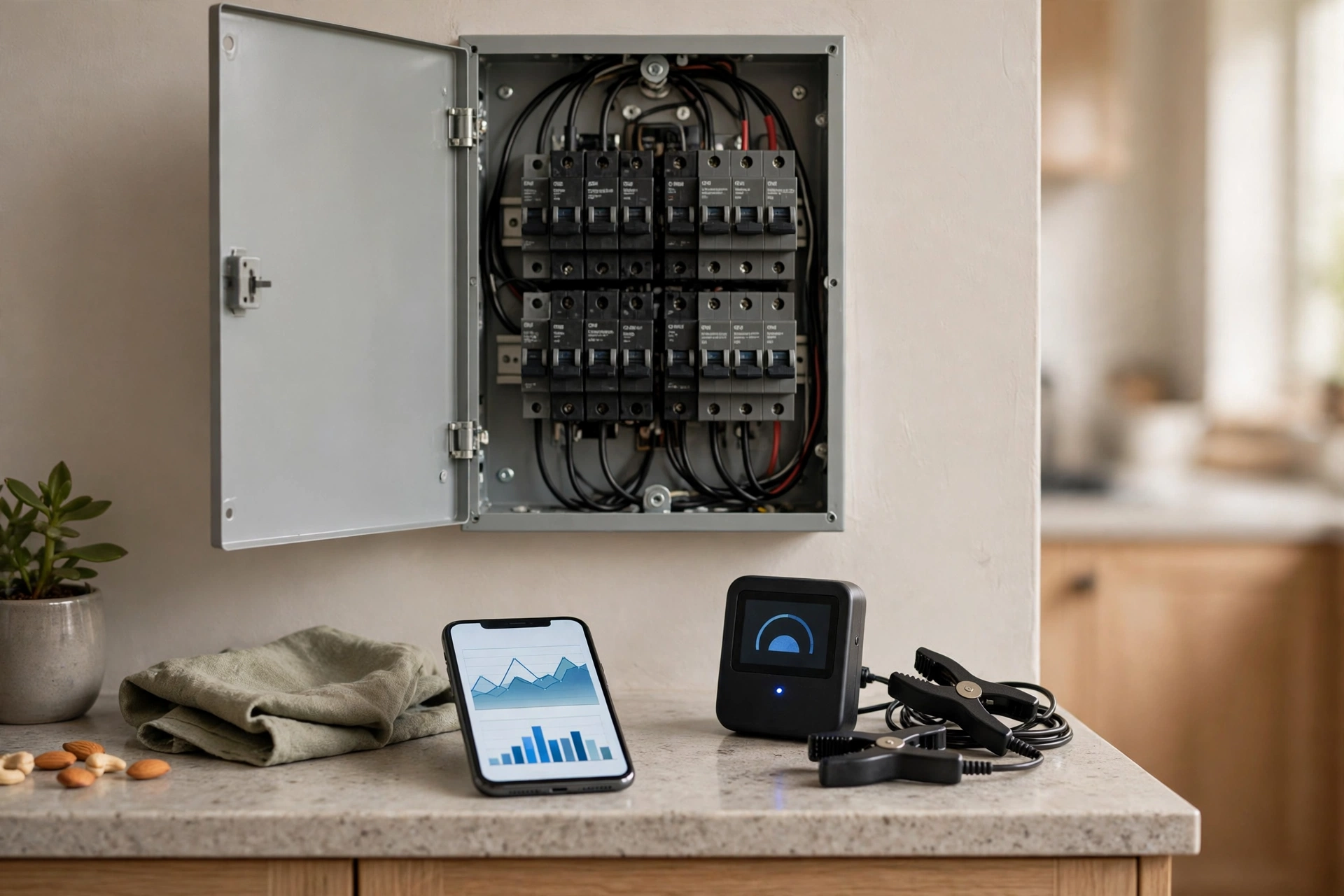
A whole-home energy monitor promises a simple idea: instead of guessing where your electricity goes, you can see it. Your monthly bill tells you the total, but it does not tell you whether the biggest share comes from heating and cooling, from a water heater, from a pool pump, or from a collection of smaller devices running around the clock. A monitor installed at your electrical panel measures your home’s overall usage in real time and, depending on the system, breaks it down by circuit or by appliance. For households facing high bills, planning solar panels, charging an electric vehicle, or simply curious about their home, that visibility can change behaviour in ways a bill alone rarely does.
This guide is for US homeowners who want to understand whole-home monitoring before they buy. It compares the two names most US readers will encounter, Emporia Vue and Sense, and explains smart electrical panels as a third path. It does not claim any product was tested by this site, and it does not quote specific prices or accuracy figures as verified facts, because models, availability, and pricing change. That caution matters especially for Sense: in general terms, Sense consumer hardware availability has changed in recent years, so readers should verify which Sense products, if any, are currently sold to homeowners, and what support and app features are currently offered, before making any plan around that brand. Emporia, by contrast, is a common alternative that many households consider today, but again, verify the current model range and pricing before you buy.
What a Whole-Home Energy Monitor Actually Measures
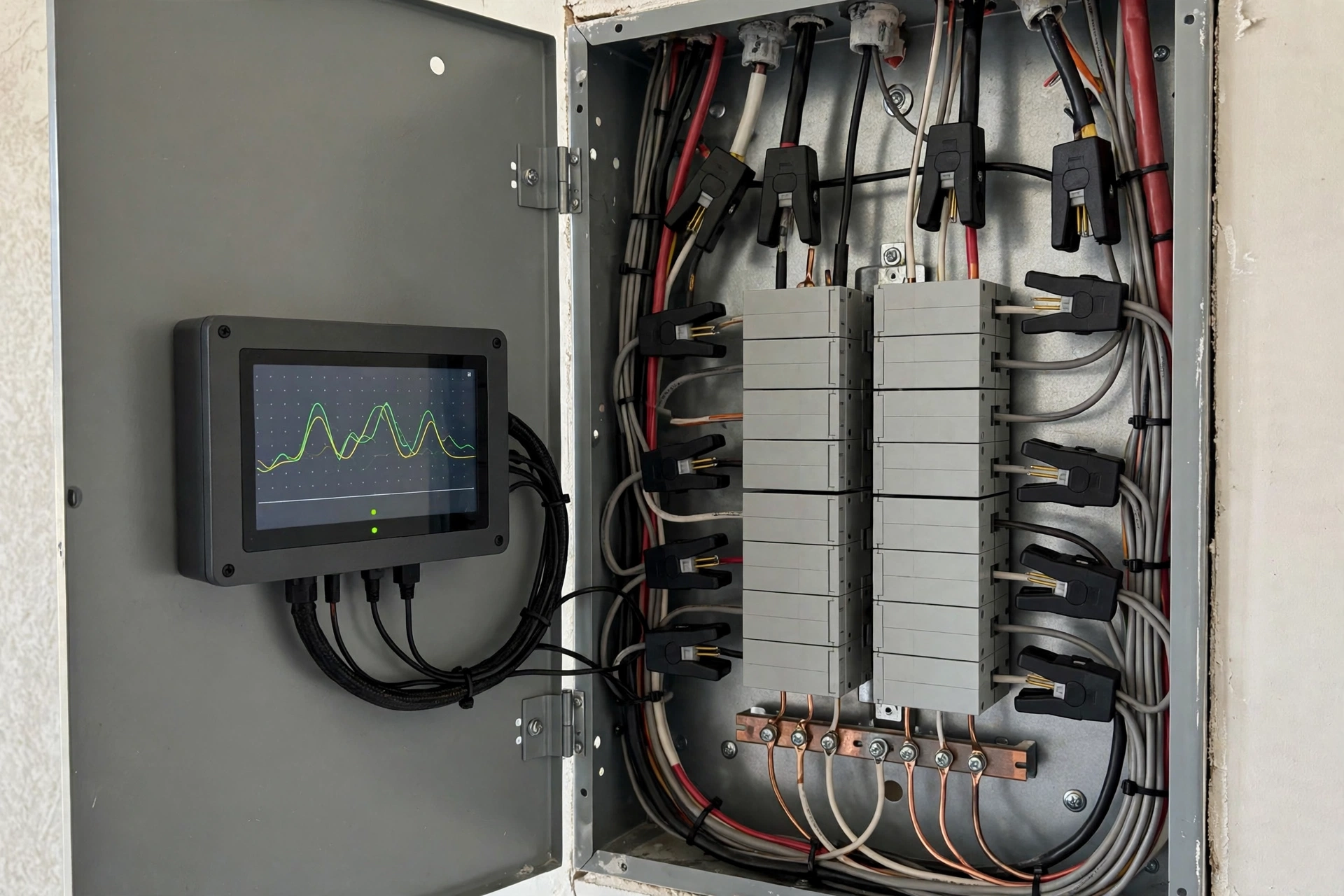
At its core, a whole-home monitor uses sensors clamped around the main power feeds inside your electrical panel. Those sensors measure how much electricity your home is drawing at any moment. The monitor sends that data to an app, where you can see real-time usage, daily and monthly totals, and patterns over time, such as a morning peak when everyone showers and cooks, or a steady overnight draw that suggests something is running when it should not be.
Emporia Vue vs Sense: How They Differ in Approach
Emporia Vue systems are generally built around circuit-level monitoring. A main unit measures total home usage, and optional add-on sensors can monitor individual circuits, so you can track, for example, your heating and cooling circuit, your water heater, or a dedicated electric vehicle charger circuit separately. That design appeals to households that want dependable, circuit-by-circuit numbers and are willing to have more sensors installed inside the panel. It also suits homes with a specific question to answer, such as how much a new heat pump or an EV charger is really adding to the bill, because a dedicated circuit sensor answers that question directly.
Sense systems, in their consumer form, became known for appliance-level detection from the whole-home signal, using software to identify individual devices without a sensor on every circuit. The appeal is obvious: fewer sensors, a simpler install, and an app that names appliances rather than circuits. The limitation is equally real: detection depends on the software recognising each appliance’s pattern, which varies by home and by appliance, and some devices, especially modern electronics with variable power draw, are harder to identify. As noted above, Sense consumer hardware availability has changed, so the practical question for a reader today is not only how the technology compares in principle, but whether a current consumer Sense product is available to buy, what it includes, and how it is supported. Do not assume that a model reviewed in an older article is still on sale in the same form.
Smart Panels: The Third Option
A smart electrical panel replaces or upgrades the traditional breaker panel with a panel that can monitor and, in some designs, control individual circuits from an app. Instead of adding sensors to an existing panel, the panel itself becomes the monitoring system, and some models let you prioritise circuits during an outage, turn a circuit off remotely, or manage solar, battery, and EV charging from one place. For a new build or a major electrical renovation, a smart panel can be an elegant solution, because the monitoring is built in from the start and the panel is designed for it.
Installation and Safety: What to Know Before You Choose
Installation is where enthusiasm meets reality, and safety must come first. Whole-home monitors install inside the electrical panel, where live conductors carry enough energy to cause serious injury. Many manufacturers describe installation as a do-it-yourself job for a confident homeowner, but that advice assumes comfort working inside a panel, knowledge of local electrical codes, and a panel with space for the sensors. If any of those are missing, or if your panel is old, crowded, or has any sign of damage, hire a licensed electrician. The cost of professional installation is a reasonable part of the total, and it is far cheaper than an accident or a panel damaged by a poor install.
What the Data Can and Cannot Tell You
A good monitor answers some questions well and others poorly, and knowing the difference prevents disappointment. It answers total usage questions well: how much electricity your home uses, when peaks occur, and whether usage is rising or falling over months. Circuit-level systems answer circuit questions well: how much the water heater, the air conditioning, or the EV charger uses. Those are the questions that lead to useful decisions, such as adjusting a thermostat schedule, insulating a water heater, or checking whether an old appliance is worth replacing.
Comparison: Monitor Types at a Glance
| System type | How it measures | Best for | Main limitation |
|---|---|---|---|
| Whole-home, total only | Sensors on main feeds | Seeing total usage and daily patterns | No breakdown by circuit or appliance |
| Circuit-level monitor | Sensors on main feeds plus individual circuits | Tracking big loads such as heating, water heating, EV charging | More sensors and panel space needed |
| Signature-based detection | Whole-home signal plus software identification | Naming appliances without many sensors | Some appliances may never be identified |
| Smart plugs (supplement) | Plug-level measurement per device | Confirming one device’s exact usage | Only covers devices you plug in |
| Smart panel | Panel-integrated monitoring and control | New builds, solar plus battery, outage management | Major electrical work and higher general cost |
Getting Value After Installation
The first month with a monitor is a learning period, not a verdict. Watch for patterns before you change anything: a morning peak, an evening peak, a steady overnight draw, and any sudden spikes. Note which circuits or appliances dominate, and compare weeks rather than single days, because weather and routines vary. A single high day after a cold snap does not mean your heating system is faulty; a steady rise over a month, or a circuit that draws power when it should be off, is more worth investigating.
Which System Should You Choose?
Start with your question. If you want to understand your total bill and find the biggest loads, a whole-home monitor with circuit sensors for your largest circuits is a strong, practical choice. If you have a specific circuit in mind, such as a new EV charger or a heat pump, make sure the system you choose can monitor that circuit directly. If you are building a new home, renovating, or adding solar and battery storage, ask your electrician about a smart panel as part of that larger project, rather than as a standalone purchase. If you rent, or if panel work is not practical, start with your utility’s usage data and smart plugs for the devices you most want to understand.
Next, check availability and support in the present day, not in an old review. For Sense in particular, verify current consumer availability, current models, and current app and support terms, because those have changed in general terms. For Emporia and for any other brand, verify the current model, what sensors are included, whether extra circuit sensors are sold separately, and whether core app features require a subscription. Finally, budget for installation: a professional install, a Wi-Fi improvement near the panel if needed, and any extra sensors for circuits you care about. A monitor that is installed safely, connected reliably, and checked regularly is worth far more than a more advanced system that sits in a box because the panel was not compatible.
For wider smart home context, the overview of the best smart home devices shows where energy monitoring fits alongside heating, lighting, and security, and the guides to Matter and voice assistants help if you want energy data to work with the rest of your smart home. Energy monitoring is not the flashiest smart home purchase, but for a household that wants evidence rather than guesses about its electricity use, it is one of the most useful.
Frequently Asked Questions
Do I need an electrician to install a whole-home energy monitor?
It depends on your experience and your panel. The sensors install inside the panel, where live parts present a real safety risk. If you are confident, qualified, and familiar with local electrical codes, some manufacturers present installation as a homeowner job. If you are unsure, if your panel is crowded or old, or if you have solar, battery, or a generator, hire a licensed electrician. Safety and a correct install are worth the cost.
Will a monitor tell me exactly what each appliance costs?
Not exactly, and the method matters. Circuit-level monitors measure known circuits directly, so circuit figures are dependable. Signature-based systems estimate appliance usage from the whole-home signal, which works well for some appliances and poorly for others. Treat appliance-level figures as helpful estimates, and use a smart plug to confirm a specific device if a purchase decision depends on it.
Is Sense still available for homeowners?
Availability has changed in general terms, and older reviews may describe products or plans that are no longer sold in the same form. Before planning around Sense, verify on the manufacturer’s current site whether a consumer product is available, what it includes, and what support and app features are currently offered. If a current consumer option is not available, consider circuit-level alternatives such as Emporia, and verify their current models and pricing in the same way.
Can a monitor work with solar panels or a battery?
Some systems support solar and battery measurement, and some do not, or require specific sensors or wiring. Tell the manufacturer or your electrician about your solar, battery, generator, and subpanels before you buy, because those details decide compatibility. A monitor that only measures grid consumption will not give a complete picture for a solar home.
Does a whole-home monitor need a subscription?
Core features are often free, but some systems charge for advanced features, longer history, or certain app functions. Check the current plan terms for the specific model, including what happens to your historical data if you do not subscribe, and whether data export is included. Factor any ongoing cost into the total, just as you would for a camera or security system.
Will a monitor lower my electricity bill by itself?
No. A monitor measures; it does not save. Savings come from actions you take after seeing the data, such as fixing a schedule, replacing an inefficient appliance, or reducing standby load. Households that check the app and act on one or two clear findings tend to get the most value, while a monitor that is never checked will not change a bill at all.
A whole-home energy monitor is best bought as an information tool with a clear question behind it. Know whether you want total usage, circuit detail, or appliance names, check your panel and your connectivity, verify current availability and plan terms, and install it safely. Done that way, it turns a monthly total into a story you can act on, circuit by circuit, and that is a solid foundation for any later decision about solar, battery storage, or a more efficient home.