10 Best Smart Water Leak Detectors for 2026
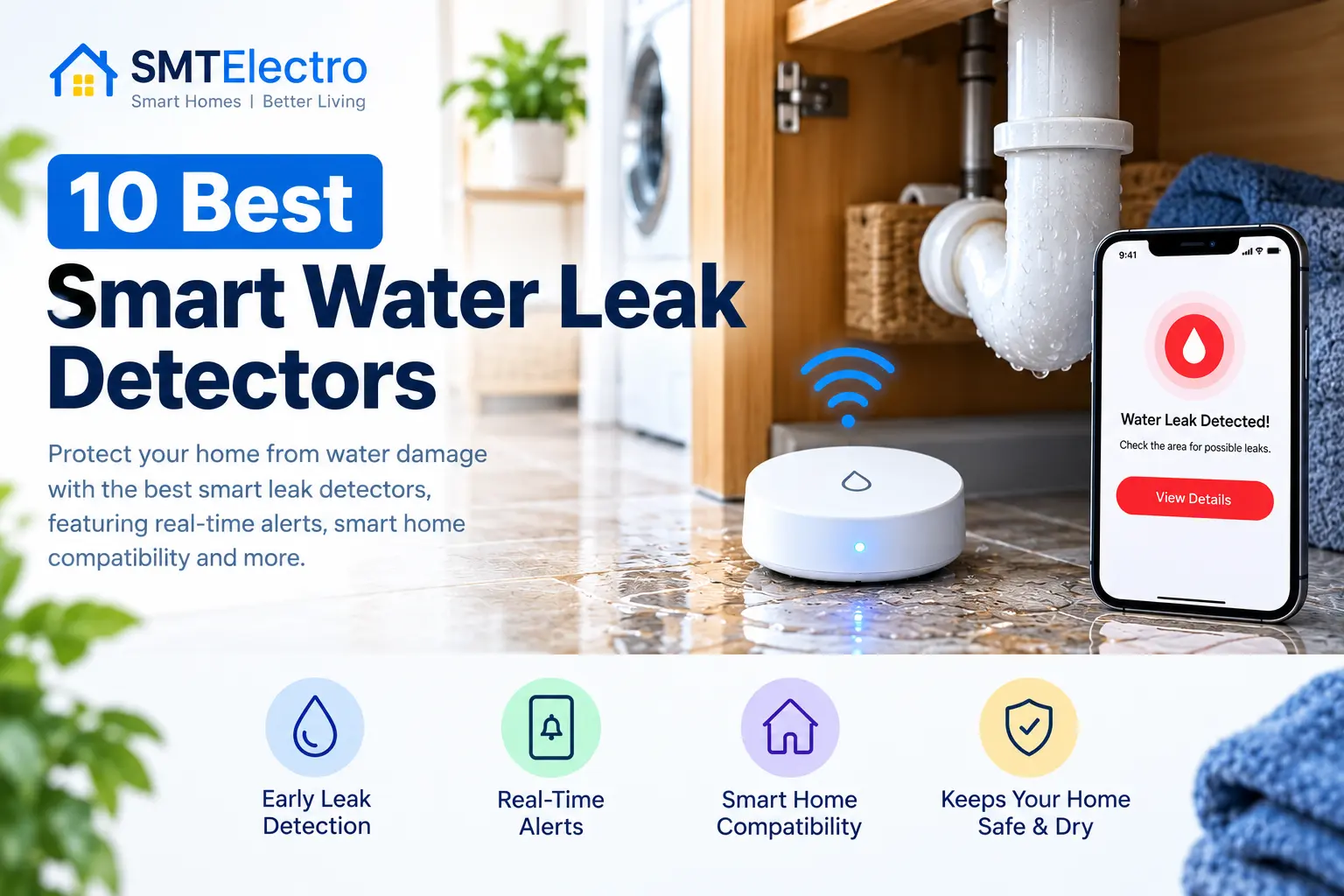
Water leaks can cause expensive damage to floors, cabinets, drywall, furniture, and electrical equipment. A small leak under a kitchen sink or behind a washing machine may go unnoticed for hours, especially when nobody is home. Smart water leak detectors help homeowners identify these problems earlier by sounding an alarm and, depending on the model, sending notifications to a smartphone.
The best smart water leak detector for your home depends on where you need protection, whether you want remote alerts, and which smart home system you already use. Some sensors connect directly to Wi-Fi, while others require a compatible hub. More advanced water protection systems can also work with an automatic shutoff valve to stop water flowing through a pipe.
In this guide, we compare 10 smart water leak detection options for 2026, explain their key differences, and help you choose the right solution for kitchens, bathrooms, basements, laundry rooms, and other areas vulnerable to leaks.
Quick answer: The First Alert L1 is worth considering for Wi-Fi leak and freeze monitoring with a sensing cable. The Flo by Moen Smart Leak Detector is an option for people who want additional environmental monitoring and multiple alert methods. IKEA KLIPPBOK is worth considering for Matter-compatible smart homes, while the TP-Link Tapo T300 is a practical choice for people already using the Tapo ecosystem.
Product availability, compatibility, and prices vary by country. Confirm the exact model and included accessories before buying.
Quick Comparison: Best Smart Water Leak Detectors
| Product | Best For | Connectivity or Setup | Key Consideration |
|---|---|---|---|
| First Alert L1 Wi-Fi Water Leak and Freeze Detector | Cable-based leak detection | Wi-Fi | Check cable configuration and availability |
| Flo by Moen Smart Leak Detector | Leak and environmental alerts | Check current model requirements | Does not shut off water by itself |
| YoLink Water Leak Sensor 4 | Multiple sensors across a property | YoLink hub or gateway | Additional hub may be needed |
| IKEA KLIPPBOK | Matter-compatible homes | Matter over Thread | Requires a Thread Border Router for smart notifications |
| Aqara Water Leak Sensor | Aqara automations | Compatible Aqara hub | Check regional model compatibility |
| TP-Link Tapo T300 | Tapo smart home users | Tapo hub required | Hub is sold separately |
| Govee Wi-Fi Water Leak Detector | Multi-sensor monitoring | Check kit and gateway requirements | Kits and connectivity vary |
| X-Sense Water Leak Detector | Multi-room leak monitoring | Check the selected kit | Confirm app and base-station requirements |
| SwitchBot Water Leak Detector | SwitchBot ecosystem users | Check model and hub requirements | Features vary by model |
| D-Link Water Sensor | Existing D-Link smart home setups | Check the exact model | Confirm current availability and support |
This is a feature-based comparison, not a claim that all 10 products have been independently tested by SMTElectro. Product selection should account for official specifications, connectivity requirements, and the needs of the installation.
1. First Alert L1 Wi-Fi Water Leak and Freeze Detector — Best for Cable Coverage
The First Alert L1 Wi-Fi Water Leak and Freeze Detector is worth considering for homeowners who want to monitor areas where water may collect along a pipe, near a water heater, or around other leak-prone equipment.
Unlike a small sensor that only detects water at its contact points, the L1 system supports a sensing cable that can extend detection coverage along a larger area. First Alert also offers a five-foot cable accessory for compatible L1 equipment. The detector supports freeze monitoring, which can be useful in properties where cold temperatures put plumbing at risk.
Key features
- Wi-Fi connectivity for connected monitoring.
- Water leak and freeze detection.
- Cable-based sensing for expanded coverage.
- Compatibility with the First Alert app.
- Expandable cable coverage with compatible accessories.
Advantages
The cable-based design is useful when a leak could develop along a pipe or across a wider floor area. Temperature monitoring adds another layer of protection in locations vulnerable to freezing conditions.
Things to consider
The L1 should not be confused with an automatic water shutoff system. Additional compatible equipment may be necessary to stop the water supply automatically. Some cable configurations may also have availability limitations, so check the current product listing before purchasing.
Best for: Homeowners who want to monitor plumbing areas with a sensing cable and receive connected leak or freeze alerts.
Official reference: First Alert cable sensor.
2. Flo by Moen Smart Leak Detector — Best for Environmental Monitoring
The Flo by Moen Smart Leak Detector is designed to help identify water leaks in common household problem areas. Depending on the model and configuration, its monitoring features can include temperature and humidity readings in addition to water detection.
These additional measurements can be useful in basements, utility rooms, and other locations where moisture conditions may contribute to household problems.
Key features
- Water leak detection.
- Temperature and humidity monitoring on supported models.
- App-based monitoring and alerts.
- Additional notification methods on supported configurations.
- Potential integration with compatible Moen water protection equipment.
Advantages
A detector that monitors more than water alone can provide additional information about the conditions around vulnerable plumbing. Smartphone alerts can also help homeowners respond when they are away.
Things to consider
The standalone Smart Leak Detector does not automatically shut off a home’s water supply. Automatic shutoff requires a compatible valve or separate water-control system. Confirm the exact alert options, connectivity, and compatibility of the model available in your region.
Best for: Homeowners who want leak detection with additional environmental monitoring.
For buyers who want whole-home water monitoring, compare standalone detectors with dedicated water monitoring and shutoff systems before making a decision.
3. YoLink Water Leak Sensor 4 — Best for Multiple Monitoring Locations
YoLink offers water leak sensors designed to work within its connected sensor ecosystem. A hub or gateway is required for the relevant connected setup, so buyers should check what is included in the selected package.
This type of system can be useful when you want to monitor multiple locations around a property rather than relying on a single detector.
Key features
- Wireless water leak sensing.
- Integration with the YoLink ecosystem.
- Connected monitoring through a compatible hub or gateway.
- Expandable sensor installations, depending on the system.
- Suitability for placing sensors in separate leak-prone areas.
Advantages
A multi-sensor setup lets you monitor different parts of a house, such as a laundry room, basement, kitchen, and water heater area. A dedicated sensor ecosystem can also make it easier to manage several monitoring points together.
Things to consider
YoLink sensors are not simply interchangeable with every Wi-Fi leak detector. Check the required hub, supported connectivity, alert features, and compatibility with any existing equipment.
Best for: Homeowners planning a multi-room monitoring setup using the YoLink ecosystem.
4. IKEA KLIPPBOK Water Leak Sensor — Best for Matter-Compatible Homes
The IKEA KLIPPBOK is a compact water leak sensor designed for placement under sinks, near appliances, and in other locations where leaks may develop. IKEA identifies it as a Matter-compatible product that uses Matter over Thread.
That distinction matters because Matter compatibility does not automatically mean a device can connect directly to a Wi-Fi router.
Key features
- Compact design for discreet placement.
- Local audible alert when water is detected.
- Matter compatibility.
- Matter over Thread connectivity.
- Integration with compatible smart home systems when properly configured.
Advantages
KLIPPBOK may be a useful option for households building a smart home around compatible Matter equipment. Its small form factor makes it suitable for placing near common sources of water leaks.
Things to consider
A compatible Thread Border Router is needed for connected smart home control and smartphone notifications. Batteries are sold separately according to IKEA’s US product listing. Check local availability and the requirements of your chosen smart home platform.
Best for: Buyers who already have compatible Thread infrastructure and want to add water leak sensing to a Matter-based home.
Official reference: IKEA KLIPPBOK water leak sensor.
5. Aqara Water Leak Sensor — Best for Aqara Automations
Aqara water leak sensors are designed to detect moisture and work with compatible Aqara smart home equipment. They may be particularly useful for homeowners who already use Aqara sensors, hubs, or automation routines.
For example, a leak detection event could be used to trigger a compatible smart home action. More advanced water-control routines depend on the devices and integrations installed.
Key features
- Water leak detection.
- Compact placement near plumbing and appliances.
- Integration with compatible Aqara hubs.
- Potential smart home automation support.
- Compatibility options that depend on the exact model and setup.
Advantages
Existing Aqara users may find it easier to manage leak detection alongside other sensors and automation routines. A network of sensors can help monitor several vulnerable areas in the same home.
Things to consider
Do not assume every Aqara water leak sensor supports the same connectivity or smart home features. Check whether the selected model requires an Aqara hub and verify compatibility with your regional model.
A leak sensor alone does not close a water valve. Automatic shutoff requires suitable compatible equipment and a properly configured automation.
Best for: Homeowners who already use Aqara and want to add water leak detection to their existing smart home system.
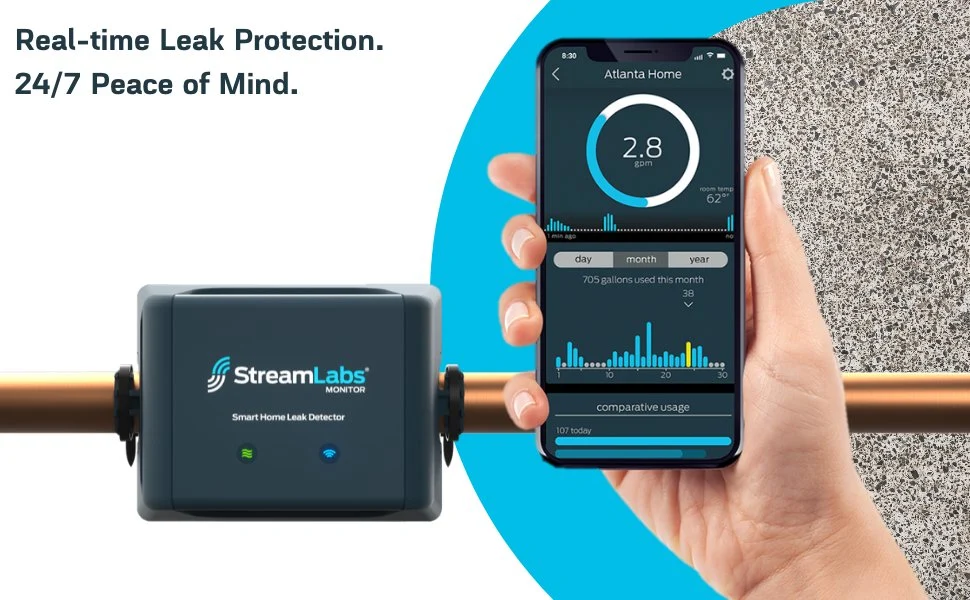
6. TP-Link Tapo T300 — Best for Tapo Smart Home Users
The TP-Link Tapo T300 is a compact smart water leak sensor designed to detect drips and leaks around sinks, washing machines, bathtubs, and similar areas.
According to TP-Link, the sensor has six detection probes, an adjustable alarm rated up to 90 dB, an IP67 rating, and smartphone notifications through the Tapo app. It requires a compatible Tapo hub, which is sold separately. One hub can support up to 64 compatible sub-GHz sensors and switches, subject to the relevant regional configuration.
Key features
- Six water detection probes.
- Alarm rated up to 90 dB.
- IP67 dust and water protection rating.
- Smartphone alerts through the Tapo app.
- Two replaceable AAA batteries.
- Compatible Tapo hub required.
Advantages
The Tapo T300 is suitable for buyers who already use Tapo equipment or plan to build a sensor-based smart home. Its multiple detection probes help it detect water contacting the sensor from different directions.
The IP67 rating is another useful specification for a device designed for damp or leak-prone environments.
Things to consider
The hub is an additional purchase if you do not already have a compatible one. Confirm the regional wireless version and compatible hub before ordering. The Tapo T300 detects leaks; it does not independently shut off the main water supply.
Best for: Tapo users who want to add leak detection to their existing smart home system.
Official reference: TP-Link Tapo T300 specifications.
7. Govee Wi-Fi Water Leak Detector — Best for Multi-Sensor Kits
Govee offers water leak detection products in configurations intended to monitor areas around a home. Depending on the kit, buyers may receive multiple sensors and a gateway or other connected equipment.
A multi-sensor kit can be a practical way to protect several rooms without purchasing a complete smart home platform.
Key features to check
- Number of sensors included.
- Local alarm and remote notification options.
- Wi-Fi or gateway requirements.
- App support and sensor status monitoring.
- Battery type and replacement requirements.
Advantages
A multi-sensor package can simplify installation across several areas. Instead of buying one detector for each location individually, buyers can compare the cost of a bundle with the cost of separate devices.
Things to consider
Govee sells different monitoring products and configurations. Do not assume that every model connects directly to Wi-Fi or includes the same gateway and alert features. Confirm the exact kit and supported functions before buying.
Best for: Buyers comparing bundled leak detection options for several rooms.
8. X-Sense Water Leak Detector — Best for Dedicated Monitoring Kits
X-Sense offers home safety and water leak detection products in different configurations. When comparing its water leak detector kits, the most important factors are the number of sensors, the included base station or gateway, and the alert methods supported by the exact model.
Key features to check
- Single-sensor versus multi-sensor package.
- Local audible alarm.
- Remote app notifications, if supported.
- Base station or network requirements.
- Battery life and low-battery alerts.
Advantages
A dedicated kit can make it easier to plan protection for multiple leak-prone areas. Buyers can select a package according to the number of locations that need monitoring.
Things to consider
Check the model number carefully. A local-alarm-only detector is not equivalent to a connected device that sends remote alerts. Verify current product availability, app requirements, and the included equipment before purchasing.
Best for: Buyers who want to compare dedicated home monitoring kits with clearly defined sensor counts.
9. SwitchBot Water Leak Detector — Best for SwitchBot Users
SwitchBot offers smart home devices that can be managed through its ecosystem. A compatible water leak detector may be worth considering if you already use SwitchBot products and want to keep your home automations within the same platform.
Key features to check
- Whether the selected model offers Wi-Fi connectivity.
- Whether a SwitchBot Hub is required.
- Local alarm and remote notification options.
- Supported automation integrations.
- Battery and installation requirements.
Advantages
Keeping connected devices within an existing ecosystem can simplify device management. It may also make it easier to build routines involving compatible SwitchBot equipment.
Things to consider
Connectivity and automation features can vary between models. Verify the precise product name, regional version, and hub requirements rather than relying on the capabilities of another SwitchBot device.
Best for: Homeowners who already use SwitchBot equipment and want a compatible leak monitoring option.
10. D-Link Water Sensor — Best for Existing D-Link Setups
D-Link has offered connected home sensors and monitoring equipment, including water detection products. However, buyers should pay particular attention to the exact model and its current support status before purchasing older smart home hardware.
Key features to check
- Exact model number and regional availability.
- Supported app and network requirements.
- Whether a hub or compatible D-Link system is required.
- Alert functionality and current software support.
- Battery replacement and warranty information.
Advantages
An existing D-Link smart home user may find a compatible sensor convenient if it integrates with equipment already installed.
Things to consider
An older product listing does not guarantee current availability or ongoing software support. Confirm that the detector can still be set up using currently supported apps and services. For a new installation, compare its long-term support with newer alternatives.
Best for: Buyers with an existing compatible D-Link system who have verified current product support.
How to Choose the Best Smart Water Leak Detector
The right detector depends on more than its price or brand. A device that works perfectly in one home may be inconvenient in another because of connectivity requirements, the placement of the leak, or the need for automatic shutoff.
1. Choose the Right Connectivity
Smart water leak detectors generally fall into three categories.
- Direct Wi-Fi devices: Connect to a compatible wireless network and may send remote alerts through an app.
- Hub-based devices: Communicate through a compatible hub or gateway. The hub may be an extra purchase.
- Matter over Thread devices: Require compatible Thread infrastructure for connected control and notifications.
Check whether the detector can communicate with your current setup before buying. A low-cost sensor can become more expensive if it needs a separate hub.
2. Decide Whether You Need Automatic Shutoff
This is one of the most important distinctions.
A basic leak detector identifies water and alerts you. It does not necessarily stop the leak. An automatic shutoff system uses compatible water-control equipment to close a valve when a leak or other defined condition is detected.
If you want automatic shutoff, verify the complete system, including:
- The leak detector or water monitoring device.
- A compatible shutoff valve or valve controller.
- Compatibility between the sensor and the valve system.
- Installation requirements and whether professional plumbing work is needed.
- What happens if the internet connection or power supply fails.
A whole-home shutoff system can offer a different level of protection from a battery-powered sensor placed under a sink.
3. Look at Detection Coverage
A small sensor is useful when water is likely to collect at a particular point. A sensing cable can cover a longer area, making it useful near pipes or water heaters.
For larger properties, multiple sensors may be more practical than trying to protect every room with a single detector.
4. Check the Alarm and Notifications
A loud local alarm is helpful when someone is at home. Smartphone notifications are valuable when the house is empty.
Before buying, confirm whether the product supports remote alerts, low-battery notifications, and the app you plan to use. Do not assume a device sends phone notifications merely because it is described as a smart sensor.
5. Verify Battery Life and Maintenance
Battery life depends on the model, communication method, settings, and actual use. Look for replaceable batteries, low-battery alerts, and clear instructions for testing the detector.
A sensor that is never tested or has a depleted battery may not provide the protection you expect.
6. Check Smart Home Compatibility
If you already use Alexa, Google Home, Apple Home, Matter, Aqara, Tapo, or another ecosystem, verify the exact supported integrations.
Compatibility can depend on the product version, hub, regional model, and software. It is better to confirm those details than to purchase a device based on a general claim of smart home support.
7. Compare the Total Cost
Consider the full cost of the installation rather than the sensor’s price alone.
| Cost Factor | Why It Matters |
|---|---|
| Sensor price | Initial purchase cost |
| Hub or gateway | May be required for operation |
| Additional sensors | Needed for multiple rooms |
| Shutoff valve | Required for automatic water control |
| Installation | Some valve systems need a plumber |
| Ongoing service | Check whether any optional subscription is required |
A less expensive sensor may be the best choice for one location, while a more comprehensive system may be better for a home with extensive plumbing or frequent travel.
Where Should You Place Water Leak Detectors?
Correct placement is essential. Install sensors close to the likely source of a leak, on a stable surface where water can reach the detection probes.
Under Kitchen and Bathroom Sinks
Place a detector near the plumbing connections, drain pipes, and other likely leak points. Keep it accessible so you can test it and replace its batteries.
Near Washing Machines and Dishwashers
Water supply hoses and appliance connections are common places to monitor. Position the sensor where escaping water is likely to collect, while following the manufacturer’s instructions.
Around Water Heaters
A detector near a water heater can provide an early warning if water begins to accumulate. Check the manufacturer’s instructions and local installation requirements, especially in areas exposed to high temperatures.
In Basements and Utility Rooms
Consider placing sensors near sump pumps, exposed pipes, water filtration equipment, and other plumbing installations. A cable-based detector may be useful where water could spread along a wider area.
Near Refrigerators With Water Connections
Refrigerators with ice makers or water dispensers have additional water connections that may need monitoring. Position the detector where leakage from the supply line or connection is likely to reach it.
Near Toilets
A detector near the base of a toilet or its supply connection can help identify certain leaks. It should be positioned where it will not interfere with normal cleaning or become inaccessible.
Can Smart Water Leak Detectors Prevent Water Damage?
Smart leak detectors can help reduce the time between a leak starting and someone becoming aware of it. They cannot guarantee that water damage will be prevented.
A sensor must be placed where leaking water can reach it. Batteries must be working, connectivity must be available for remote alerts, and someone must be able to respond to the notification. Even a loud alarm may go unnoticed when a property is empty.
Automatic shutoff systems may reduce the amount of water released during some failures, but their effectiveness depends on the type of leak, installation, valve operation, and system configuration.
For better protection, combine suitable sensor placement with regular plumbing inspections and a clear plan for shutting off the water supply during an emergency.
Smart Water Leak Detector Safety and Maintenance Tips
Follow these practical steps after installing a detector:
- Test each sensor: Use the manufacturer’s recommended test procedure to verify operation.
- Check battery status: Replace batteries when indicated and keep spare batteries available if appropriate.
- Review notifications: Confirm that app alerts are enabled and that the device is connected.
- Keep sensors accessible: Avoid covering the detection probes or placing devices where water cannot reach them.
- Inspect plumbing periodically: Sensors supplement maintenance; they do not replace it.
- Keep software updated: Install supported firmware and app updates when available.
- Plan for outages: Understand whether the device’s local alarm works without internet access and what happens when the hub loses power.
- Know your shutoff location: Make sure household members know how to stop the water supply if necessary.
Never handle electrical equipment standing in floodwater. If water is near electrical outlets, wiring, or energized equipment, stay clear and contact qualified professionals.
Frequently Asked Questions
Are smart water leak detectors worth buying?
They can be worthwhile for homeowners who want an earlier warning of leaks around sinks, appliances, plumbing, and water heaters. Their value depends on the risk of water damage, the number of locations being monitored, and whether remote alerts or automatic shutoff are needed.
Do smart water leak detectors need Wi-Fi?
Not all of them. Some provide only a local audible alarm, some connect directly to Wi-Fi, and others use a hub or Thread network. Check the product specifications to determine whether internet access is needed for the features you want.
Can a smart water leak detector shut off water automatically?
A basic detector generally alerts you rather than stopping the flow of water. Automatic shutoff requires a compatible valve or water-control system and a properly configured installation.
How many water leak sensors should a home have?
There is no single number that works for every home. Start with vulnerable locations such as under sinks, near washing machines, around water heaters, and near plumbing in basements. Larger homes may need additional sensors in separate rooms.
Are water leak detectors waterproof?
Some models have a specified ingress protection rating, such as IP67, while others have different levels of protection. Check the exact rating and installation instructions. A water leak detector should not automatically be assumed suitable for permanent submersion or outdoor use.
Will a water leak detector work during a power or internet outage?
It depends on the model. A battery-powered sensor may continue to sound its local alarm, but remote notifications may stop if the hub, router, internet connection, or required service is unavailable. Check the manufacturer’s outage guidance.
Can I install a smart water leak detector myself?
Many standalone sensors are designed for simple placement and setup. Automatic shutoff valves and whole-home water monitoring equipment may require plumbing work or professional installation. Follow the instructions for the exact product and local requirements.
Do smart water leak detectors require a subscription?
Not all products do. Subscription requirements vary by manufacturer and service. Confirm whether remote notifications, history, automation, or other features require a paid plan before purchasing.
What is the difference between a leak detector and a whole-home water monitor?
A leak detector generally identifies water at a specific sensor or cable. A whole-home water monitor may track flow through the main supply line and can sometimes identify unusual water usage. Some whole-home systems also support automatic shutoff, depending on the model.
Final Verdict: Which Smart Water Leak Detector Should You Choose?
The best choice depends on your home and the level of protection you need.
- For cable-based coverage: Consider the First Alert L1 Wi-Fi Water Leak and Freeze Detector.
- For environmental monitoring: Compare the Flo by Moen Smart Leak Detector and its available alert features.
- For a multi-sensor ecosystem: Consider YoLink if its hub-based setup suits your property.
- For Matter over Thread: Look at IKEA KLIPPBOK if you already have compatible Thread equipment.
- For Tapo users: The TP-Link Tapo T300 is worth considering, provided you have or plan to buy a compatible hub.
- For existing Aqara, SwitchBot, Govee, X-Sense, or D-Link users: Check the exact model’s compatibility, connectivity, and ongoing support before expanding your system.
For most homeowners, the best starting point is to identify the areas most vulnerable to leaks, decide whether smartphone alerts are necessary, and then compare the total installation cost. If preventing extensive water damage is the main goal, consider whether a compatible automatic shutoff system offers meaningful additional protection.
A well-placed, properly maintained detector can provide an important early warning. The key is choosing a product that fits your home’s plumbing, connectivity, and maintenance needs.
Editorial note: Product features and compatibility are based on manufacturer information and available product references. This article does not claim first-hand testing of every product. Confirm specifications, regional availability, and pricing before publication or purchase.